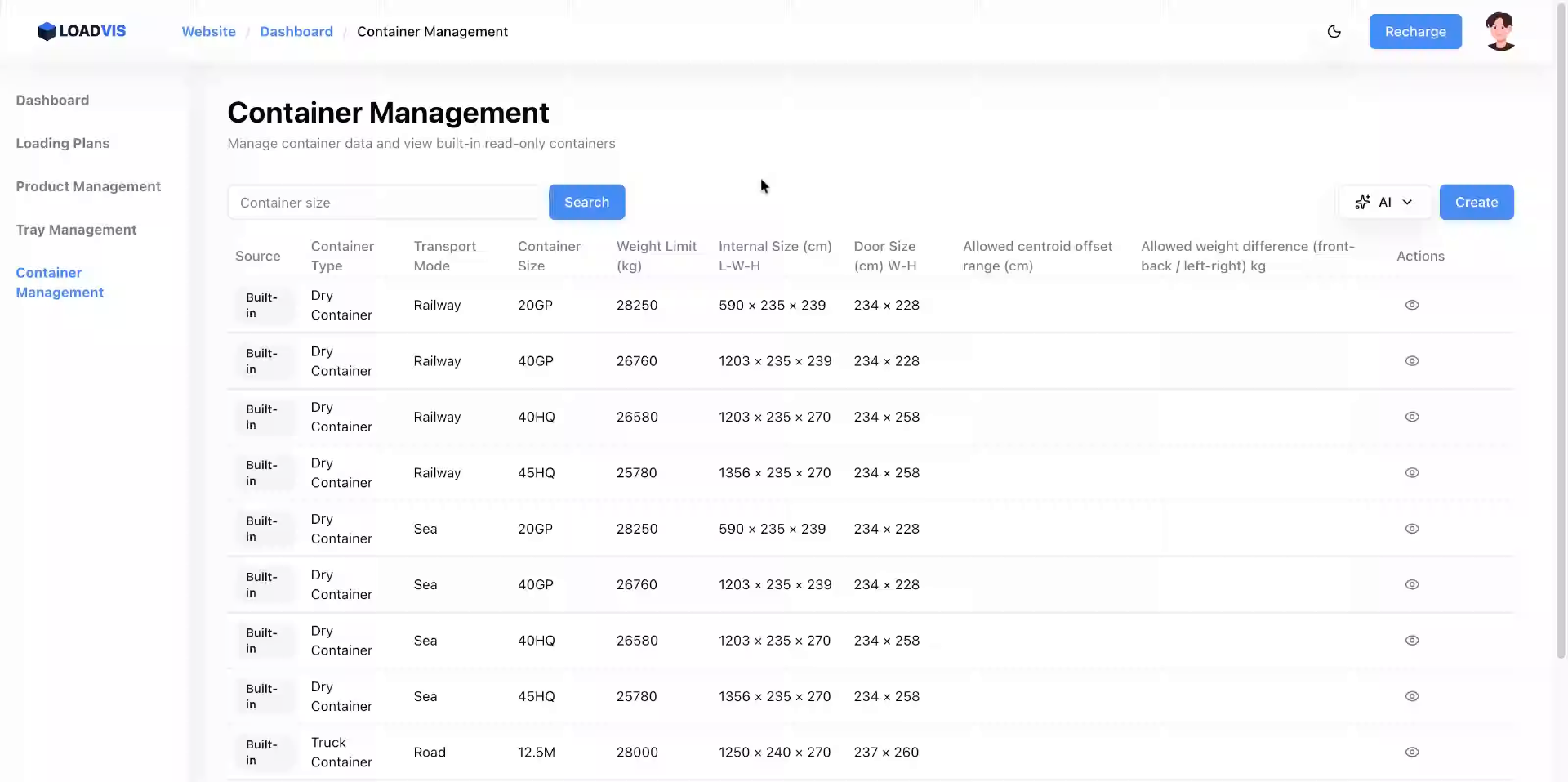
1. SCENARIO & PROBLEM
You proceed to carry out observation of the live dock camera feed. The planning monitor renders a pristine layout. Volumetric utilization sits comfortably above ninety-four percent. Total payload weight remains securely within the rated threshold. Yet the forklift operator has brought the machinery to an immediate halt. He refuses to advance the mast. A vertical column of reinforced pallets has physically impacted the corrugated door header. The mathematical model succeeded. The physical environment rejected it.
We consistently conflate internal storage capacity with ingress clearance boundaries. Internal height parameters merely dictate the maximum theoretical tiering limit. Door opening height establishes the literal geometric threshold that every unit must successfully traverse during initial placement. When the entry constraint is completely omitted from the configuration file, or when the system silently forces it to inherit the internal cavity dimension, the optimization algorithm will happily construct an impenetrable block. It will calculate the densest possible packing arrangement. It will entirely disregard the mechanical envelope required by the handling equipment to maneuver the lead row past the doorway. You ultimately receive a layout that achieves perfect numerical density while remaining completely unexecutable during physical staging. The solver did not malfunction. You simply supplied an incomplete set of boundary conditions.
2. WHY IT'S UNDERESTIMATED
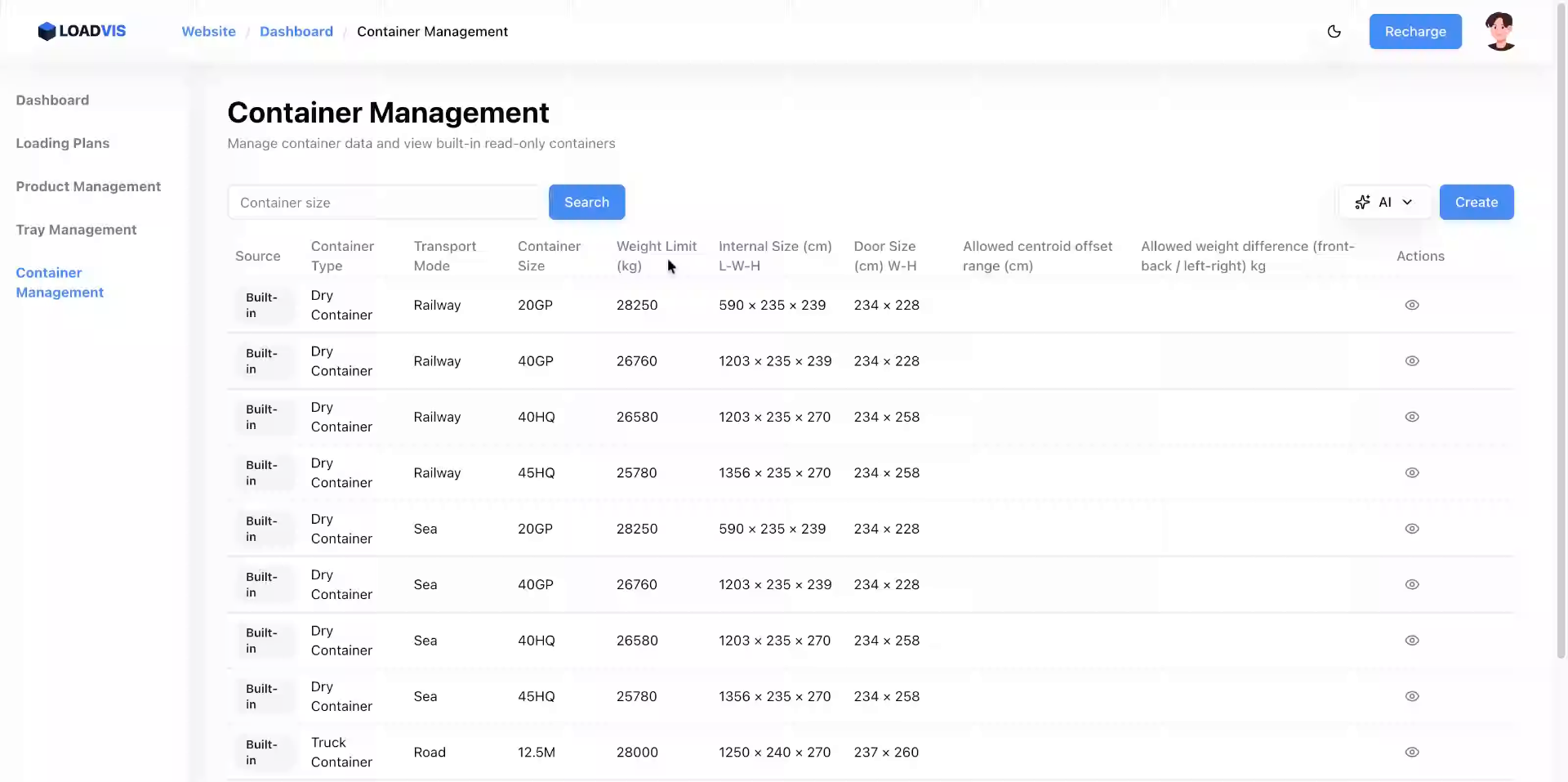
Planning professionals habitually direct their primary attention toward gross cubic volume calculations and rated payload thresholds. Those figures stand prominently on every carrier manifest. Door clearance dimensions, by contrast, remain tucked away inside the poorly formatted footnotes of dense PDF specification sheets. Teams frequently assume the entrance opening naturally mirrors the interior void. Why wouldn't we proceed with that assumption? It presents a highly convenient shortcut. The majority of legacy load planning systems actively reinforce that exact complacency. They prompt you to perform data entry for standard internal length, width, and height coordinates. They leave the actual ingress boundary completely unpopulated.
When a constraint parameter remains explicitly blank, the underlying optimization algorithm interprets the void as an infinite vertical clearance. It proceeds to treat the narrowest physical choke point as an entirely open staging zone. The resulting calculation will occupy every available spatial coordinate. It will completely ignore the spatial requirements of the forklift carriage assembly and the potential pallet overhang. You only ever identify the structural flaw when the rubber tires make contact with the loading dock and the cargo physically strikes the steel door frame. The operational oversight compounds rapidly because nobody ever measures the clearance during the initial freight quoting phase. We simply place absolute trust in the software default. That misplaced trust routinely costs multiple man-hours in unplanned restaging operations.
3. KEY OPERATIONS & THEIR PURPOSE
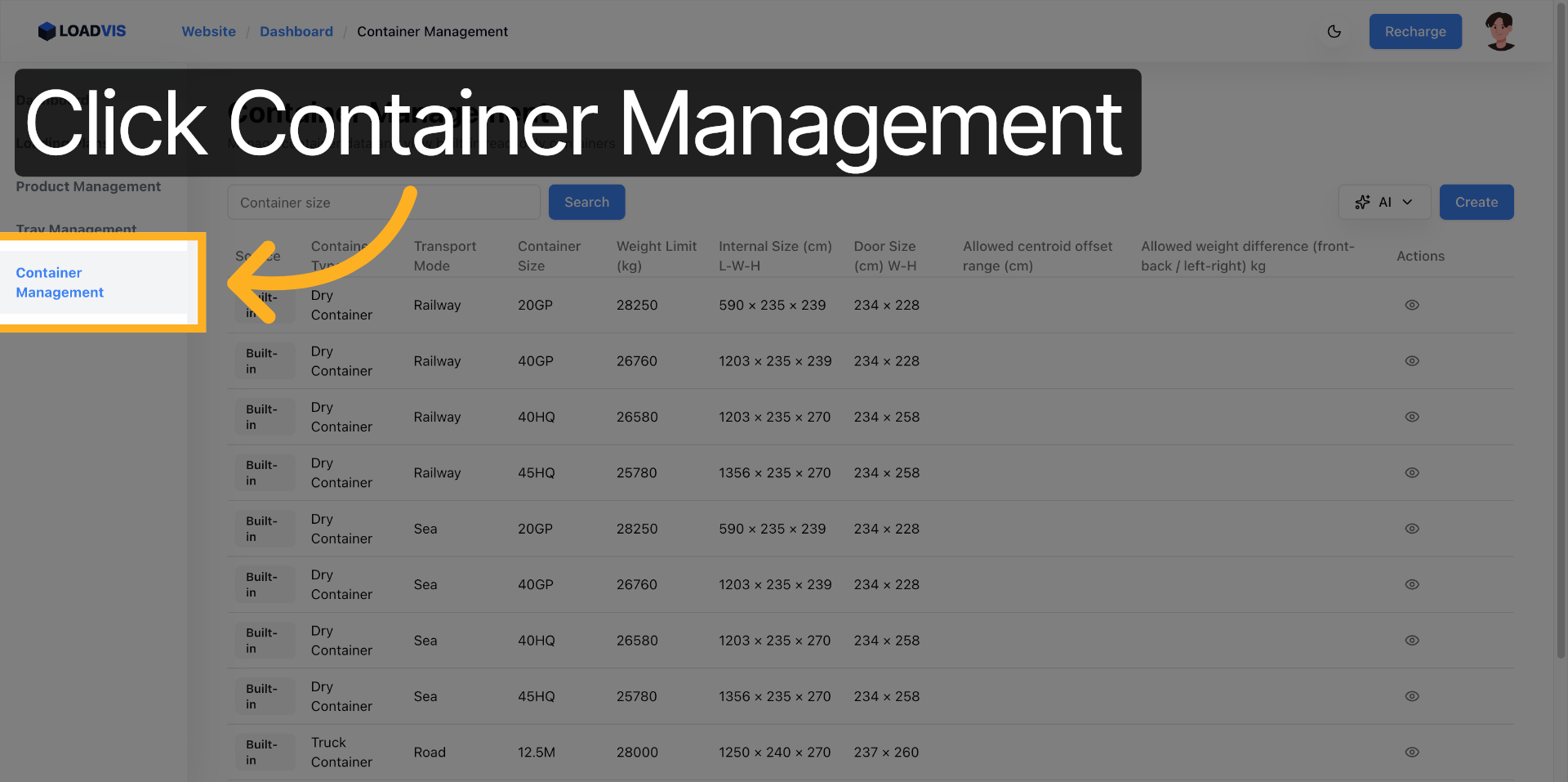
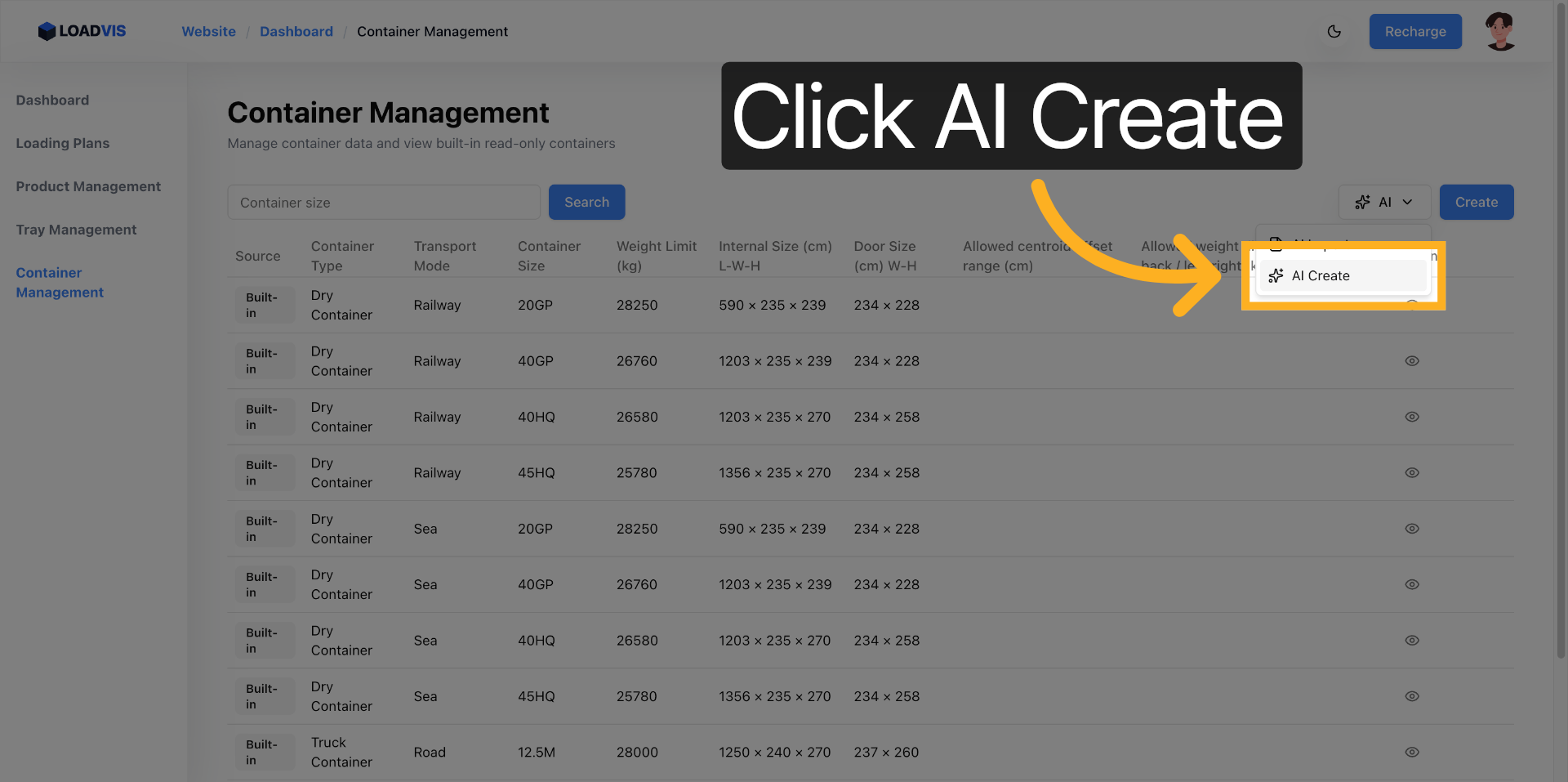
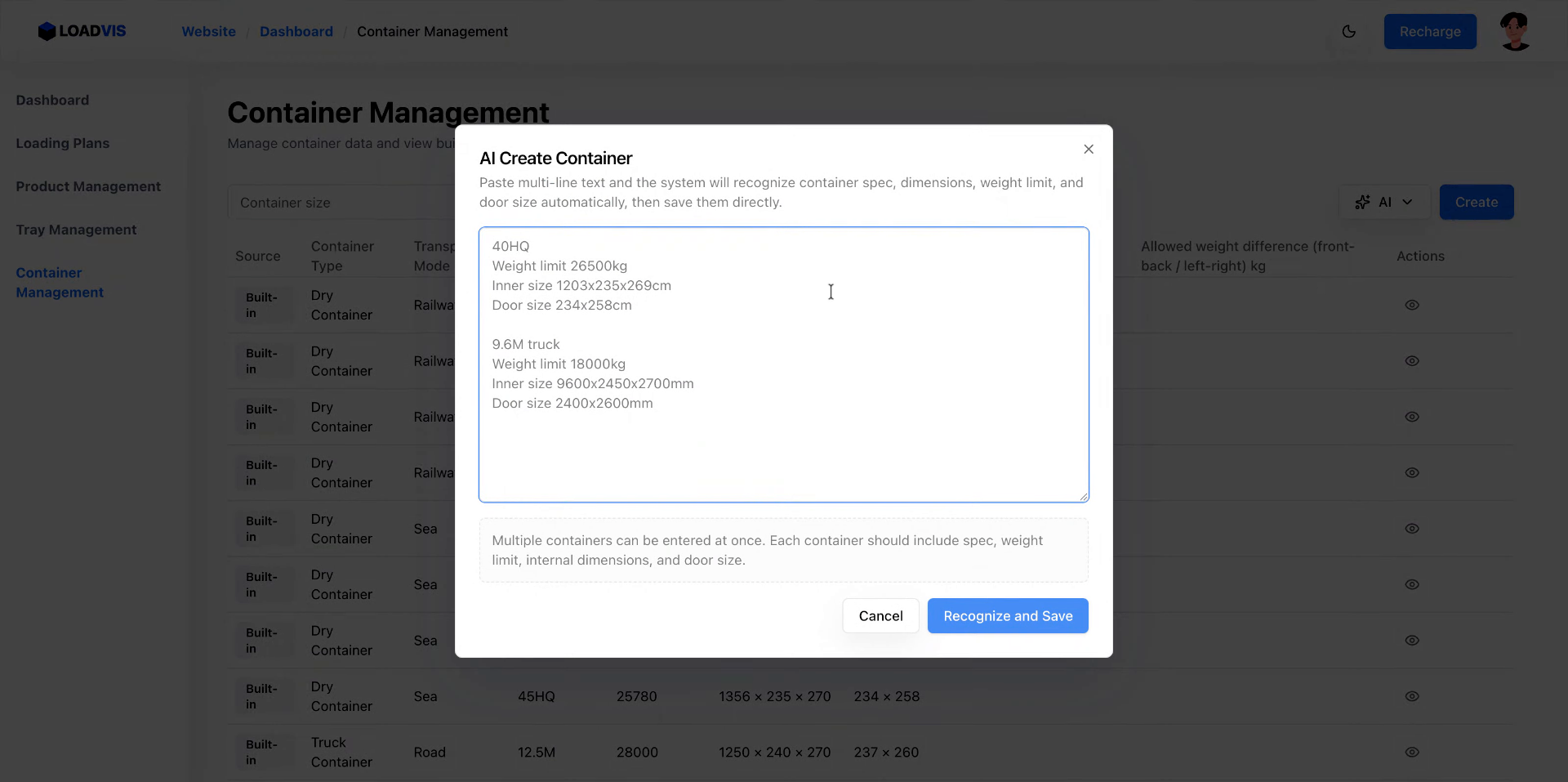
You must initiate the management process for the raw specification data before the planning engine ever attempts to process it. Proceed to navigate your way toward the Container Management module located within the primary workspace interface. You will subsequently trigger the execution of the AI parsing routine by performing an interaction with the AI Create control element. This specific operational step carries significant weight. You should never resort to manually keying in dimensional coordinates by hand. Human transcription errors are a statistical certainty.
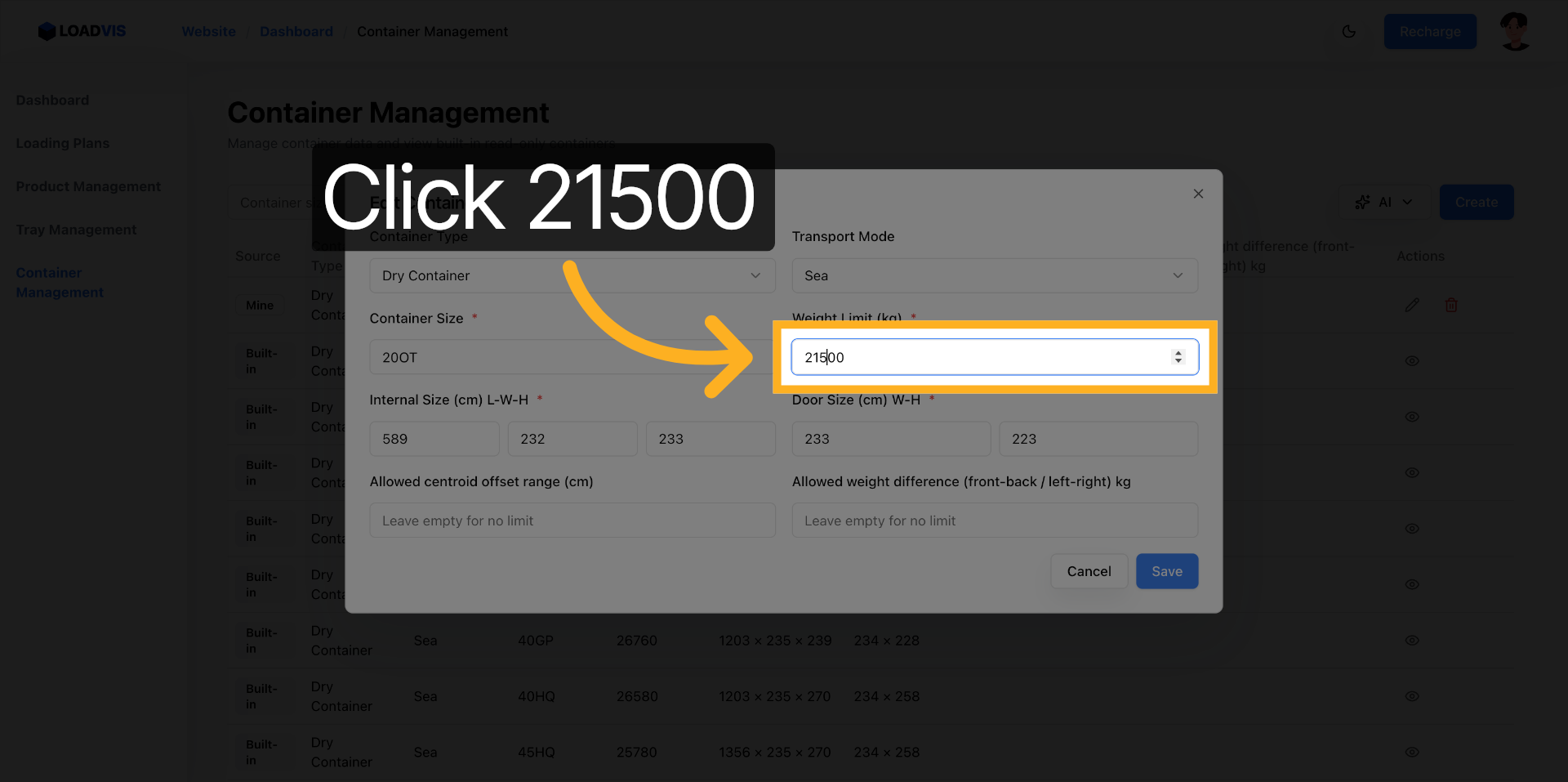
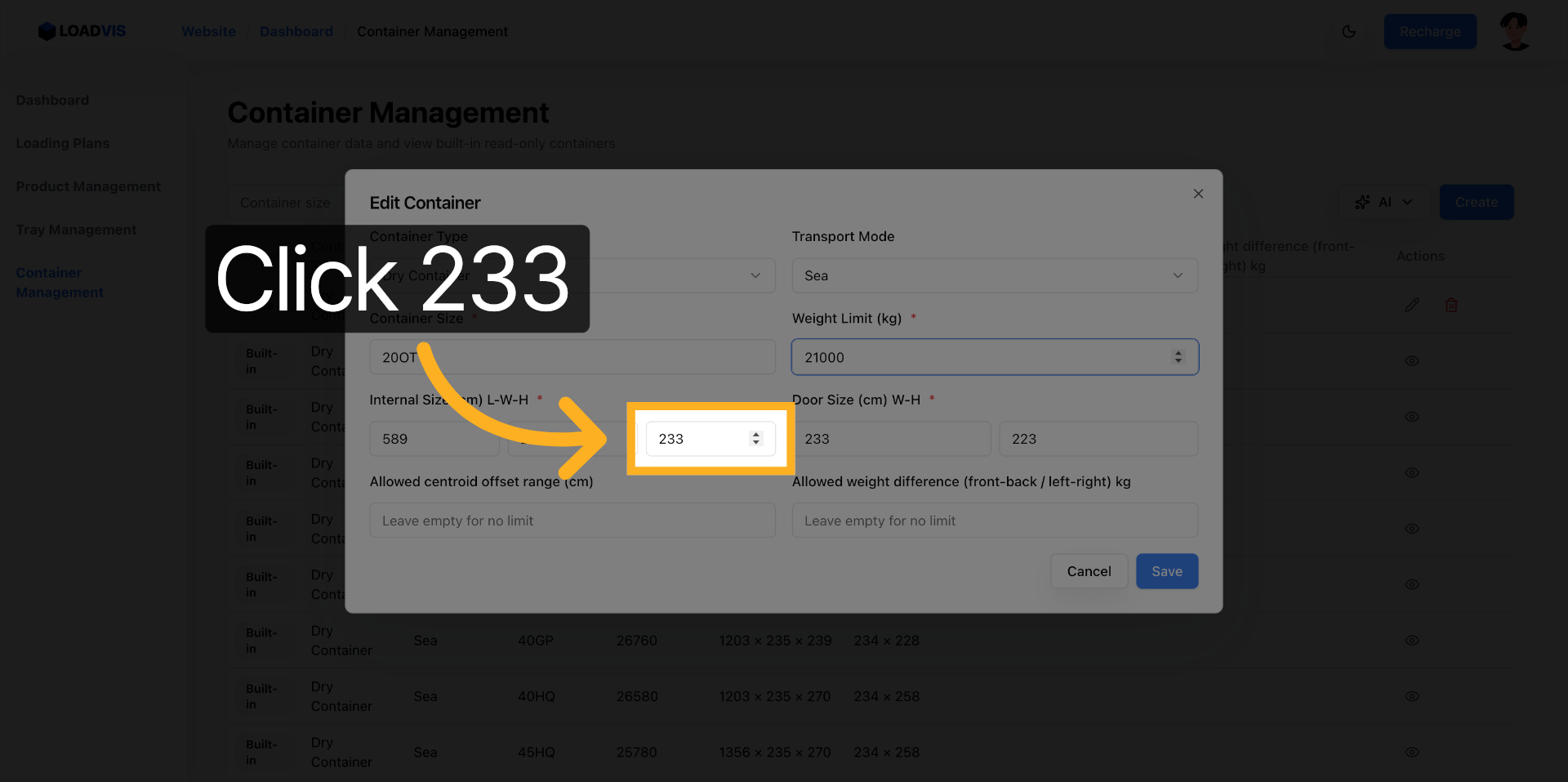
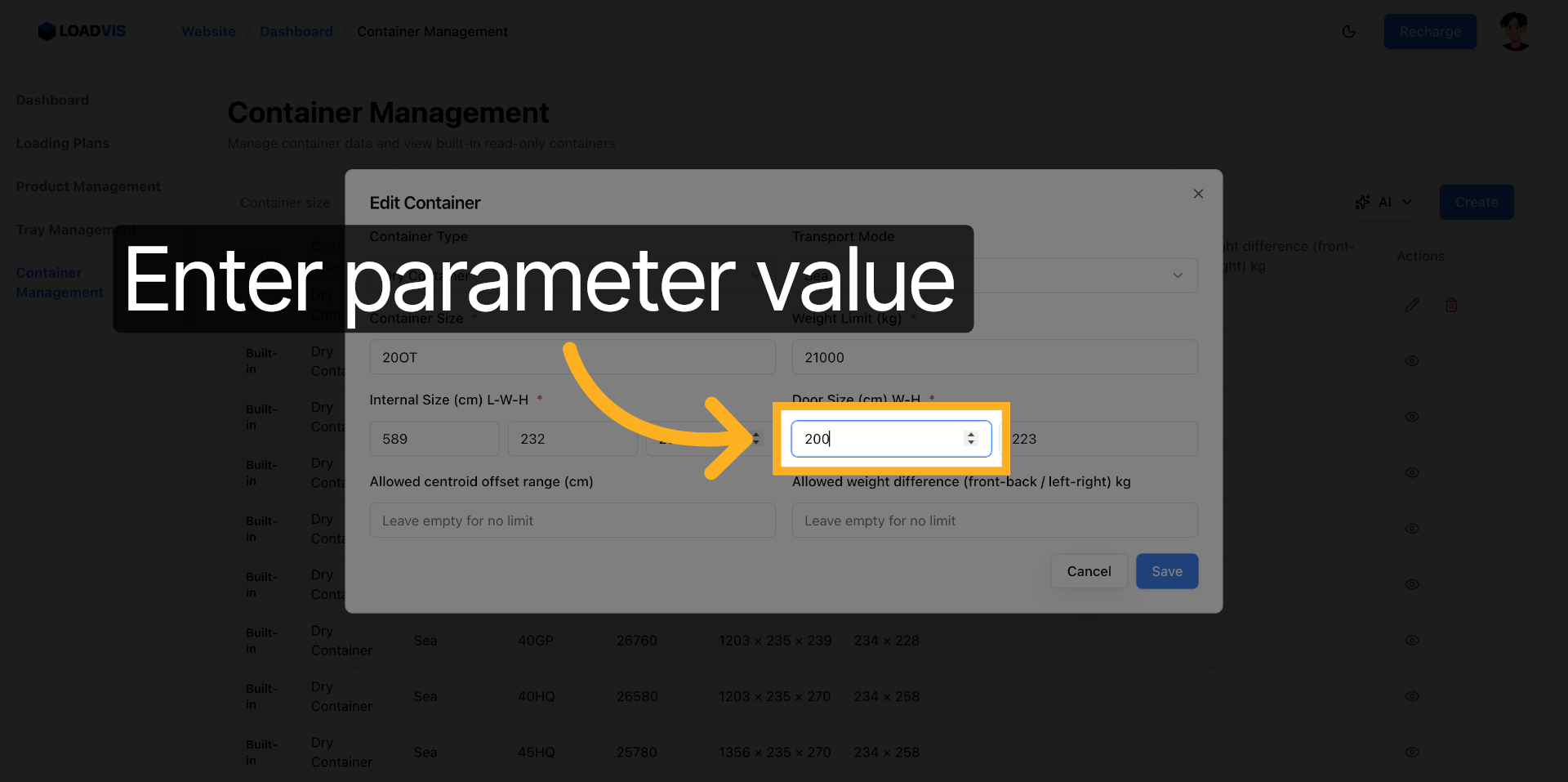
Carry out the action of pasting the completely unstructured vendor specification text directly into the dedicated recognition input field. The string typically resembles something like 20OT Max Weight: 21,500 kg Internal: 589×232×233 cm Door Opening: 233×223 cm. You will observe the parsing mechanism begin to dissect the raw character stream. The fundamental objective behind this procedure extends far beyond mere keystroke reduction. You are actively forcing the software architecture to decouple the static storage geometry from the dynamic entry geometry. The algorithmic solver requires explicitly separated variable definitions. Proceed to execute a click upon Recognize and Save. The system will subsequently commit those isolated data fields directly into the constraint matrix utilized by the solver. You are effectively redrawing the mathematical boundaries of the feasible region. The subsequent time the planning routine initiates, it will automatically factor in mast-dependent loading requirements and automatically discard any stacking configuration that attempts to exceed the twenty-two point three meter vertical threshold.

4. WRONG VS RELIABLE APPROACH
Let us directly compare the two divergent implementation pathways. You grab a standardized generic code such as 20GP or 40HC. You perform the input operation for only the internal cavity dimensions. You deliberately leave the door clearance fields completely unpopulated, or you permit the interface to automatically default them to the internal height value. What unfolds immediately afterward? The solver assumes the existence of an infinite vertical entry corridor. It packs tall, rigid cargo directly against the terminal opening edge. The loading sequence appears structurally flawless on the digital interface. It completely collapses during the physical staging phase at the warehouse dock.
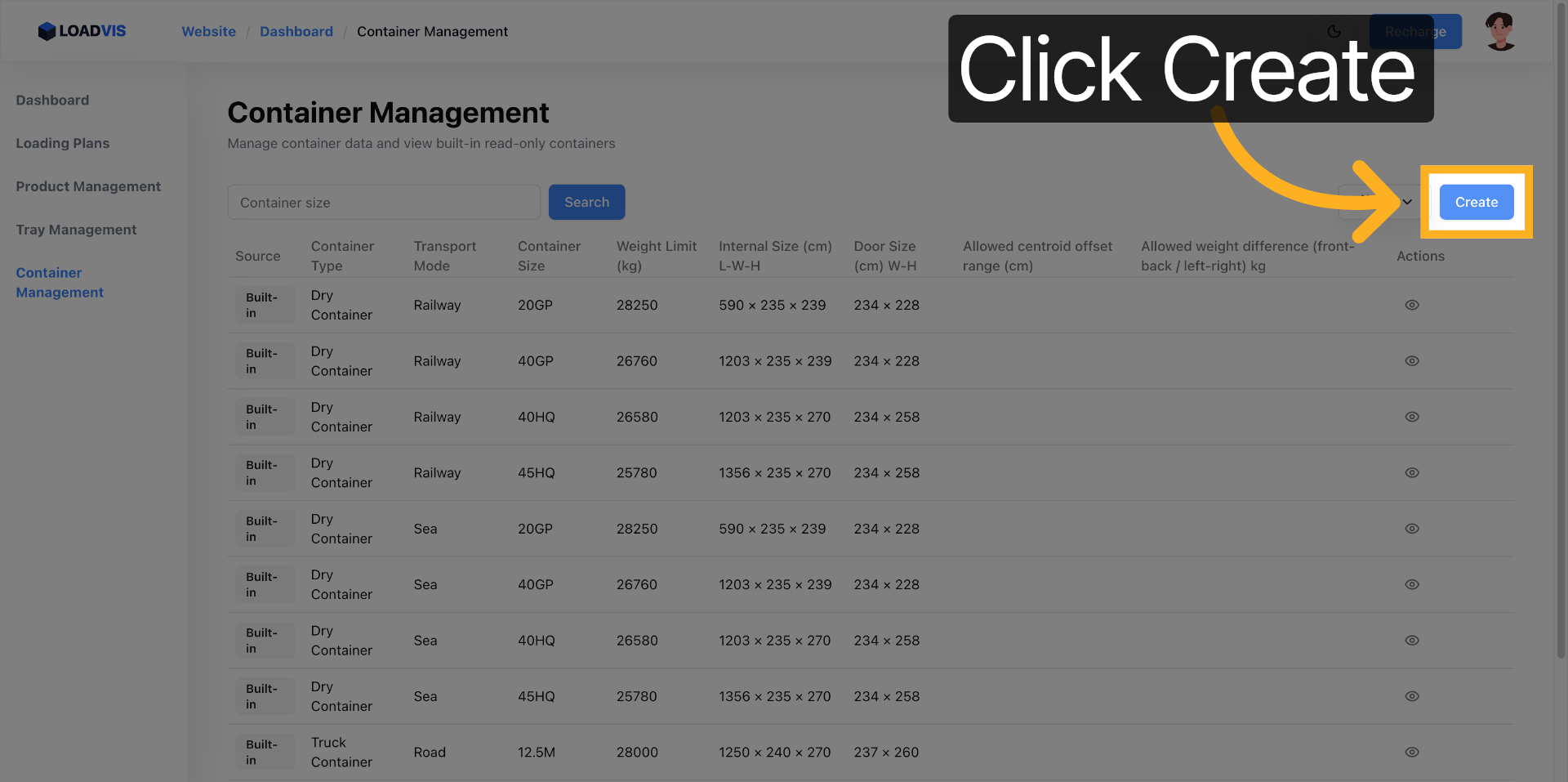
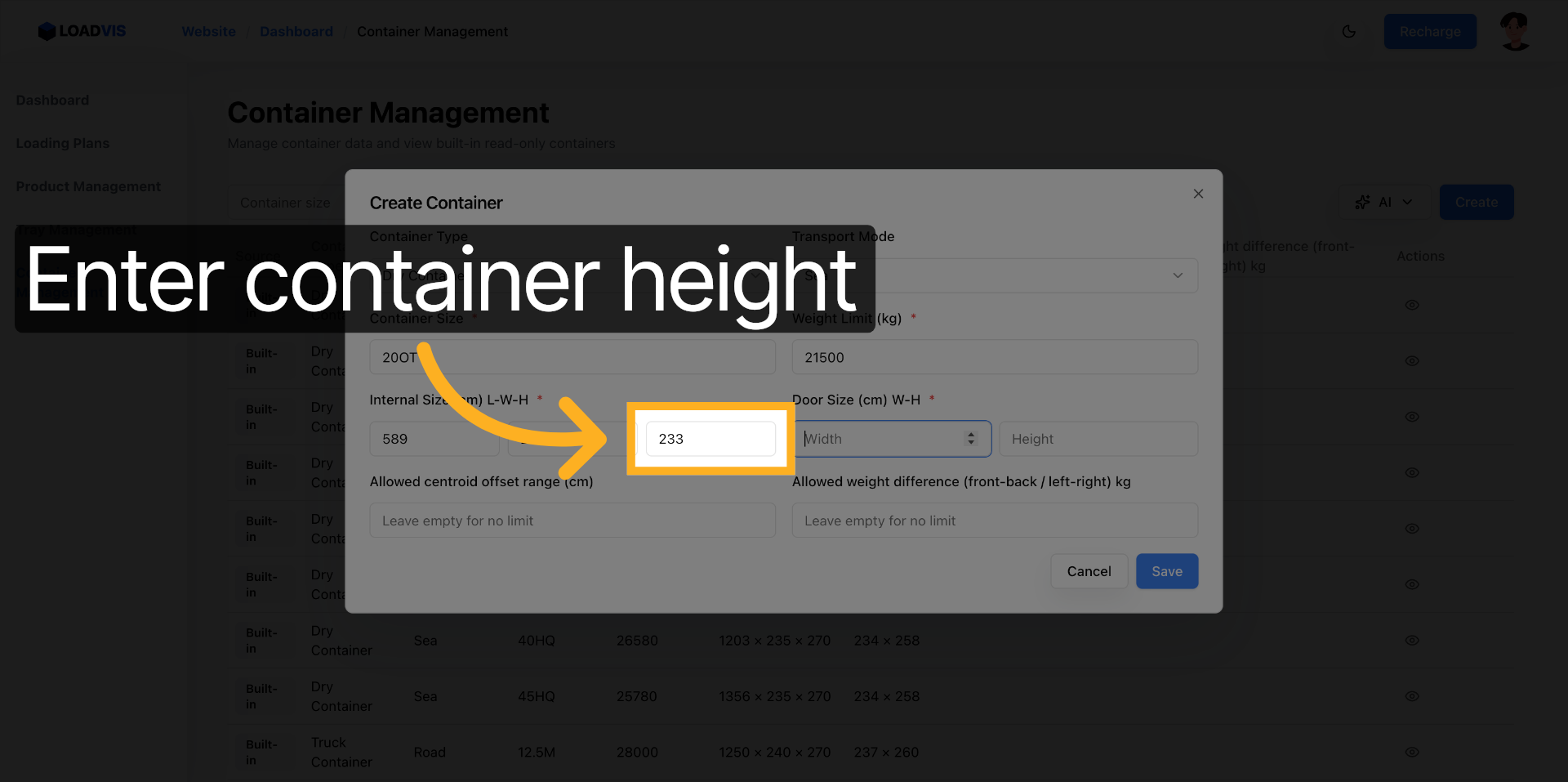
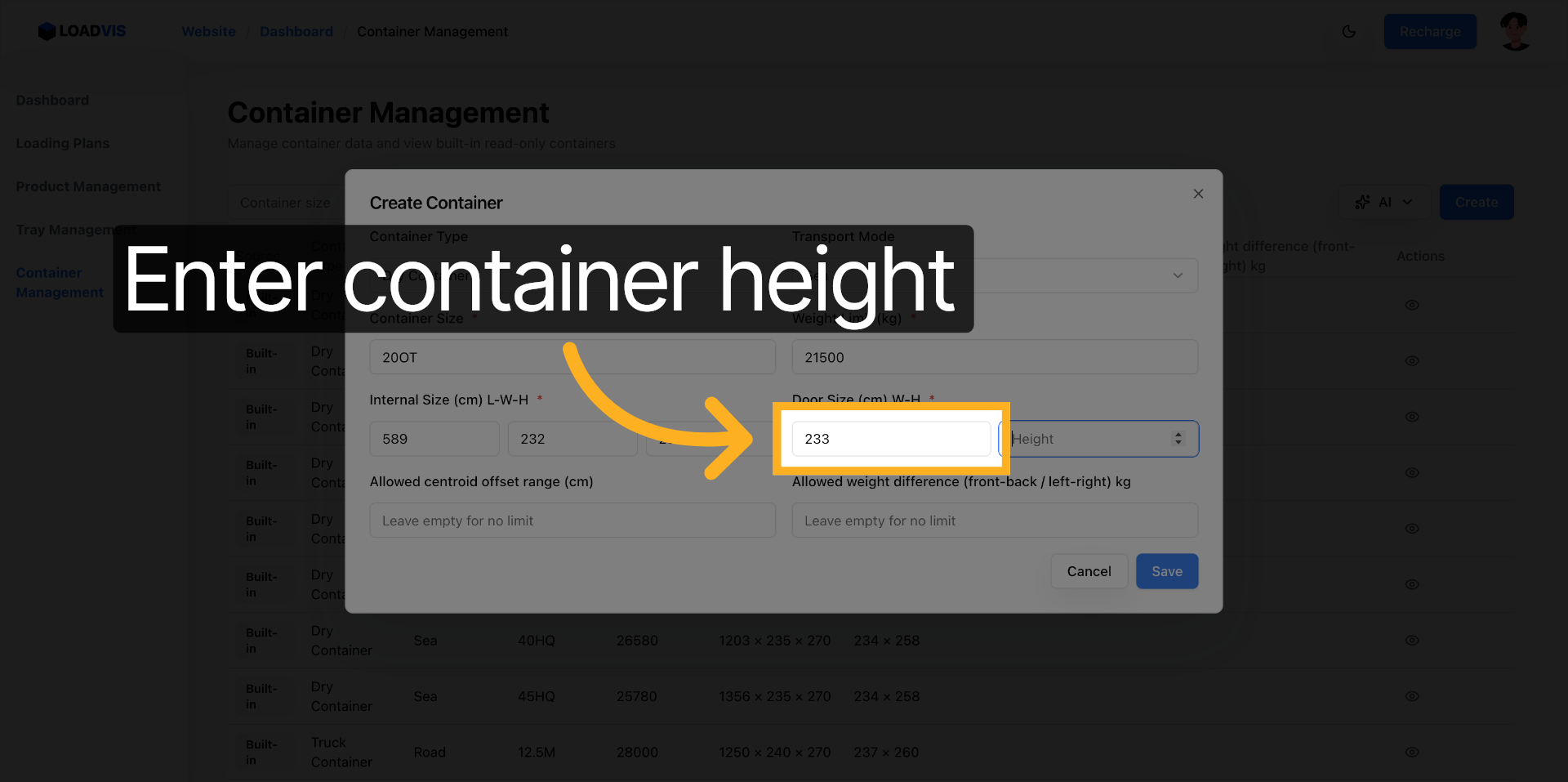
Now you attempt to walk the reliable pathway. You explicitly configure the Door Height and Door Width parameters as rigid mathematical constraints. You do not merely perform the act of inputting the raw manufacturer specification. You apply a calculated execution buffer directly to the base measurement. You proceed to add the maximum allowable Product or Pallet Height to the known Forklift Mast operational clearance, then you append an additional five to ten centimeters of mechanical tolerance. You carry out a thorough verification of the calculated clearance threshold before committing the data to the system. Only after completing that validation do you proceed to finalize the template. This operational discipline guarantees that algorithmic feasibility aligns perfectly with physical dock reality. The generated layout actively respects the geometric funnel of the container.
5. TOOL CAPABILITIES & MANUAL BOUNDARIES
The automated text recognition subsystem demonstrates a highly reliable capability when encountering completely unstructured specification documentation. It proceeds to execute automatic field mapping across the parsed dataset. It effectively strips away the manual transcription overhead and consistently achieves an approximate reduction of eighty percent in the configuration time expenditure. That operational efficiency is entirely factual. But you must not permit the automation layer to induce a state of operational complacency. The parsing engine cannot physically step onto the loading bay. It cannot independently verify dimensional accuracy against a physical tape measure. It cannot autonomously detect outdated carrier revisions that quietly arrive in your email inbox. It certainly cannot automatically catch your own internal unit mismatches.
You are required to perform manual validation procedures at every single integration gate. First, rigorously distinguish the internal measurement parameters from the door opening dimensions. Second, carry out a comprehensive validation routine for unit consistency across every individual data field. The intermixing of centimeters, millimeters, and imperial inches occurs with alarming frequency in vendor documentation. Third, execute a careful cross-check against specialized container variants such as Open Tops, Refrigerated units, or High Cube modifications, where door geometry frequently deviates significantly from standard dry van profiles. The system will happily ingest and persist completely fabricated parameters if you present it with consistently formatted garbage. Never proceed to engage in automated saving operations without performing a deliberate boundary review. The human operator must consistently function as the final constraint verification checkpoint.
6. SUMMARY
A container template only attains a genuinely execution-ready state after you explicitly define those critical entry constraints. You must rigorously validate them against your actual on-site handling equipment specifications. The software platform successfully bridges the operational gap between disorganized vendor documentation and highly structured solver input matrices. It does not, and will never, replace the necessity for physical operational verification. That ultimate responsibility permanently remains in your domain.
You must judge every single configuration deployment by one strict, non-negotiable criterion. Proceed to initiate the planning routine only if the configured door clearance value strictly exceeds the maximum intended entry stack height plus the mandatory equipment operating margin. Any configuration that falls short of that threshold is nothing more than an educated guess. Maintain extremely tight control over the constraint parameters. Carry out a thorough review of the spatial geometry prior to deployment. Long-term operational repeatability depends entirely upon that discipline. The optimization engine will only ever produce results that directly reflect the boundary conditions you deliberately feed it. Make those conditions explicitly clear.