1. Scenario & The Core Problem
You stare at the 3D solver output. Ninety-two percent volume utilization. The geometric packing looks mathematically pristine. Then reality strikes the dock door. The forklift operator slams the brakes. Refuses to proceed.
Why? Because the stacked height physically collides with the container rear threshold. The wooden deck undergoes unacceptable sagging. Or the calculated weight distribution triggers an immediate safety violation on the ground. The computational solver did not actually experience a logical breakdown. The boundary conditions you fed into it were fundamentally inaccurate.
Planning teams habitually treat physical platforms as neutral coordinate planes. They ignore the platform's intrinsic mass. They bypass material load ceilings. They leave reinforcement clearance undefined. When you feed neutral placeholders into a constraint satisfaction engine, the algorithm calculates against fictional physics. It yields theoretically dense arrangements. It completely disregards the structural interference zones that actually exist in the warehouse.
2. Why This Problem Is Often Underestimated
Operators focus heavily on cargo bounding boxes. They obsess over container fill rates. They casually regard the tray as a simple starting dimension. That mental model fractures under dynamic transit conditions. A tray functions as an active structural constraint.
Its empty weight directly reduces the available payload capacity. Its maximum bearing limit dictates safe stacking layers. Its reinforcement clearance modifies usable vertical airspace by several centimeters. You leave those fields blank, and you invite silent overruns. You copy generic templates from unrelated shipments, and you force the optimizer to navigate a geometry that does not exist. The resulting plan appears optimal on a monitor. It collapses the moment human operators attempt physical execution.
3. Key Operations & Why They Matter
Based on the tray management workflow, three distinct parameter groups carry out the enforcement of execution feasibility.
Tray Self-Weight: You must proceed to carry out the precise transcription of the actual empty platform mass into the system registry. The calculation engine actively accumulates this baseline weight alongside your total inventory mass during the optimization cycle. You omit it, and you silently breach axle regulations or container payload ceilings.
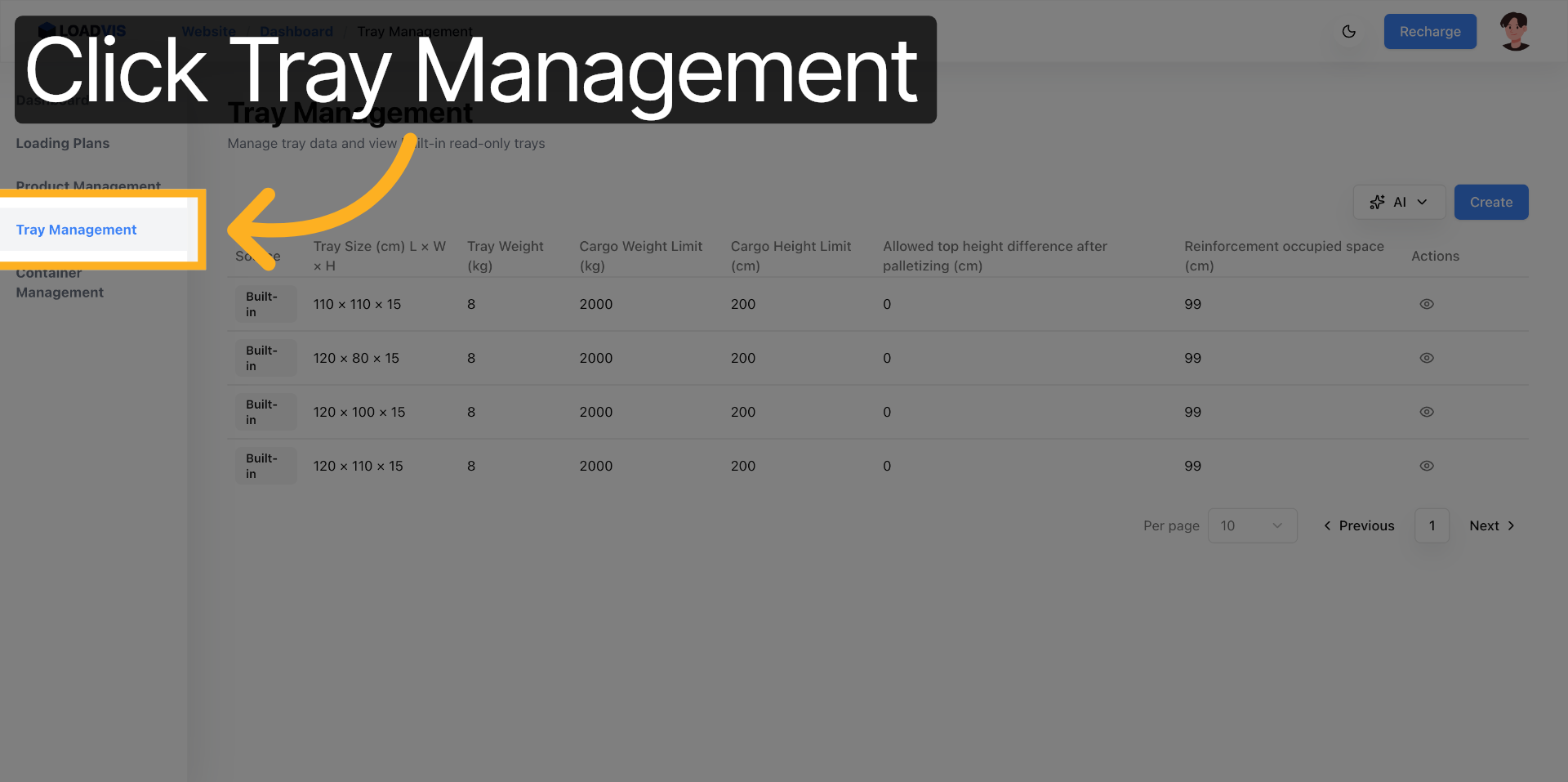
Maximum Cargo Load: This numerical field establishes the rated bearing threshold of the physical material. You carry out the process of defining this cap, and the solver strictly limits stacking layers to prevent structural deformation. Dynamic highway vibration will crush an overloaded deck. The parameter stops that scenario before it reaches the loading bay.
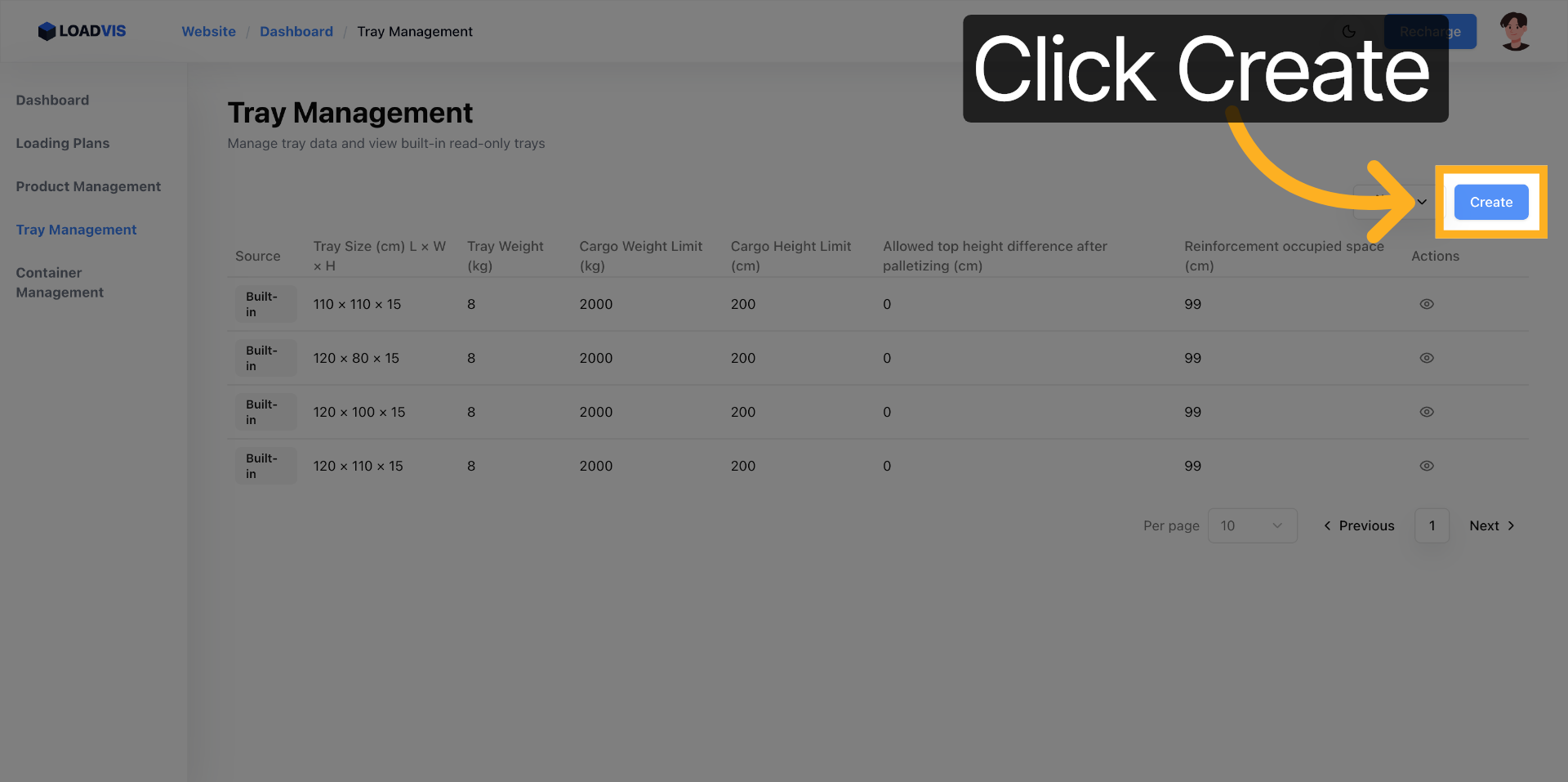
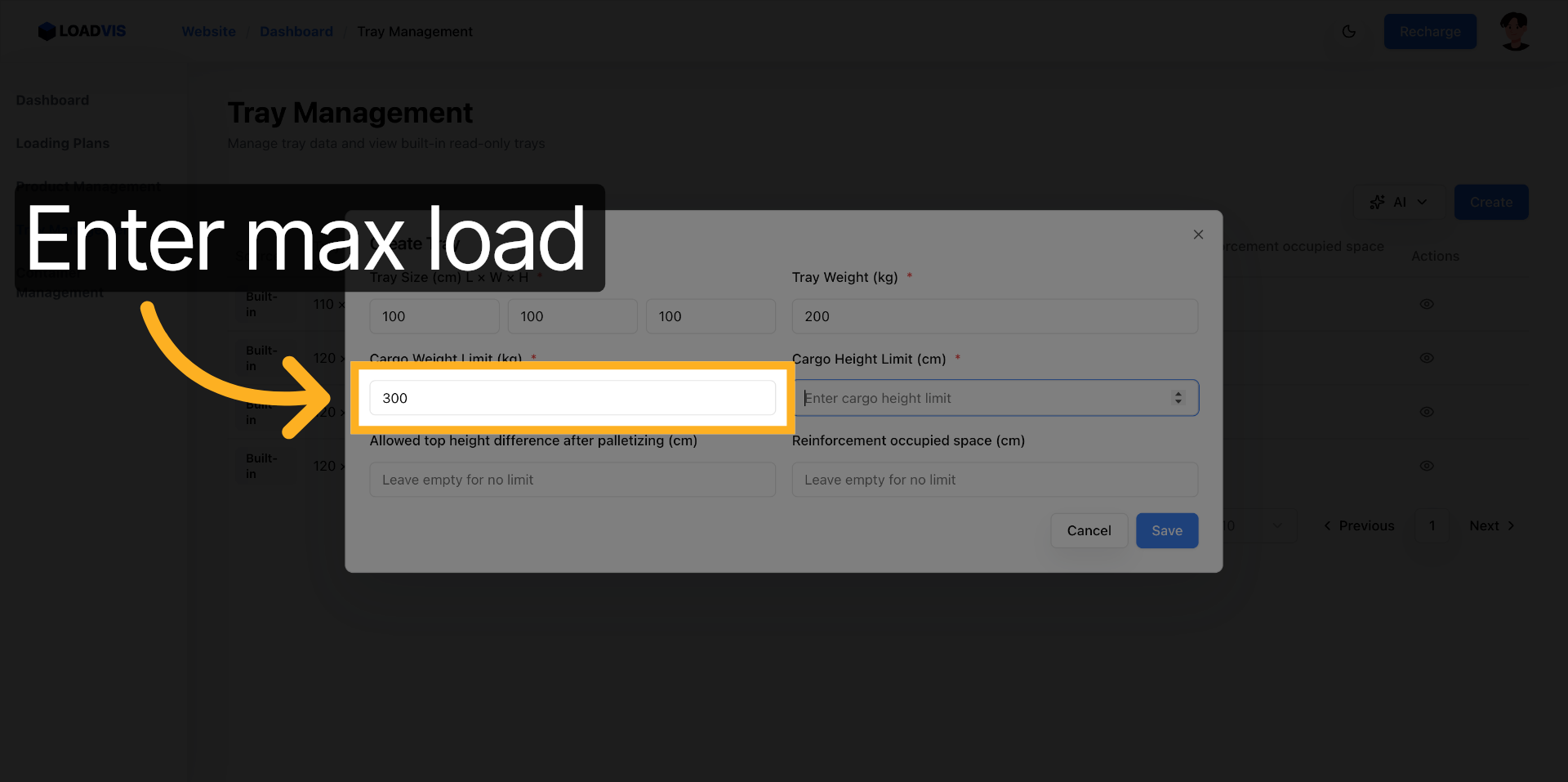
Reinforcement Clearance & Height Constraints: This setting determines whether the solver accounts for structural ribs, top blocks, or forklift engagement tolerances. You leave these parameters undefined, and the engine assumes perfectly flat, frictionless stacking surfaces. High-throughput cross-dock environments rarely operate that way.
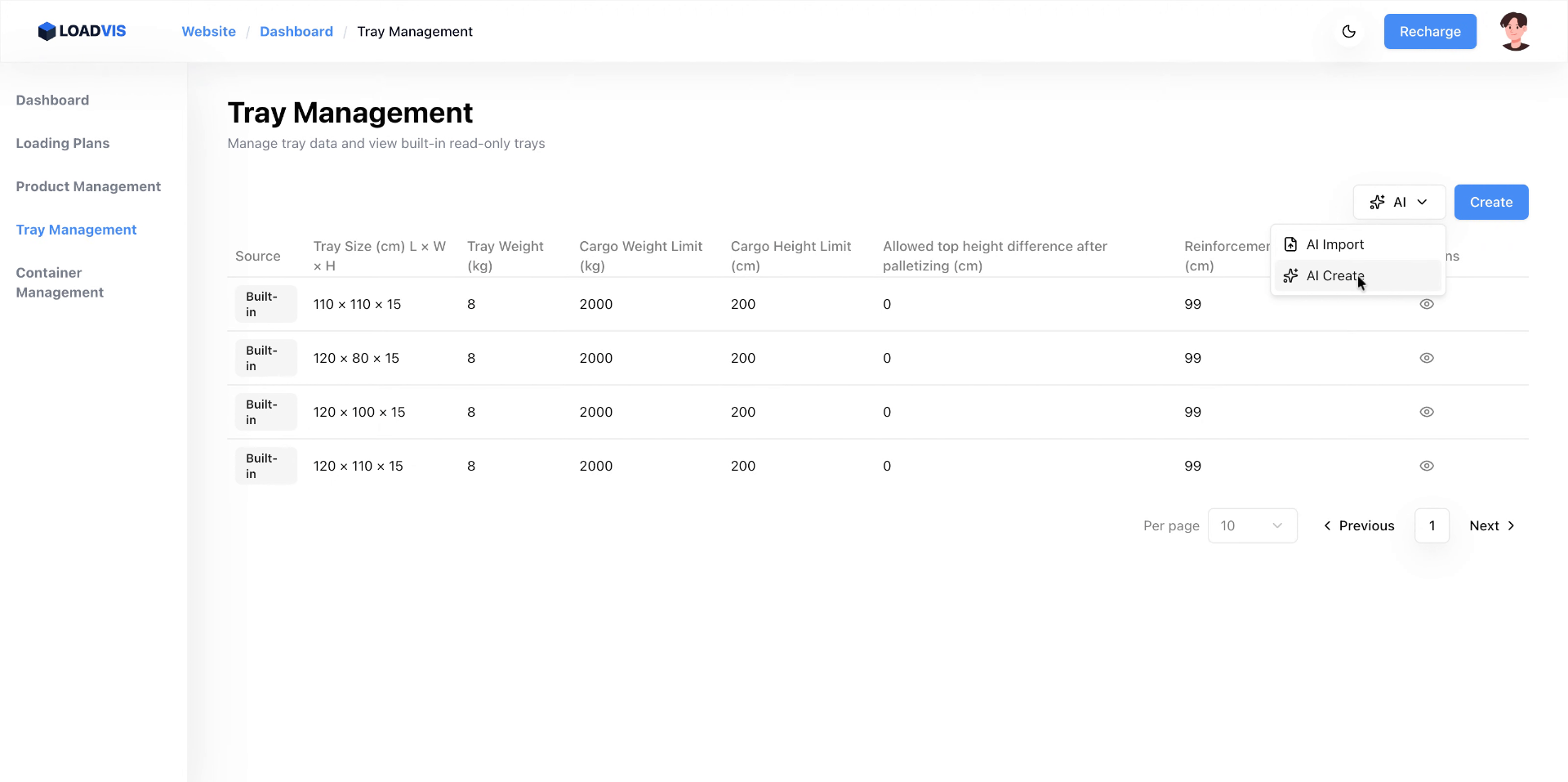
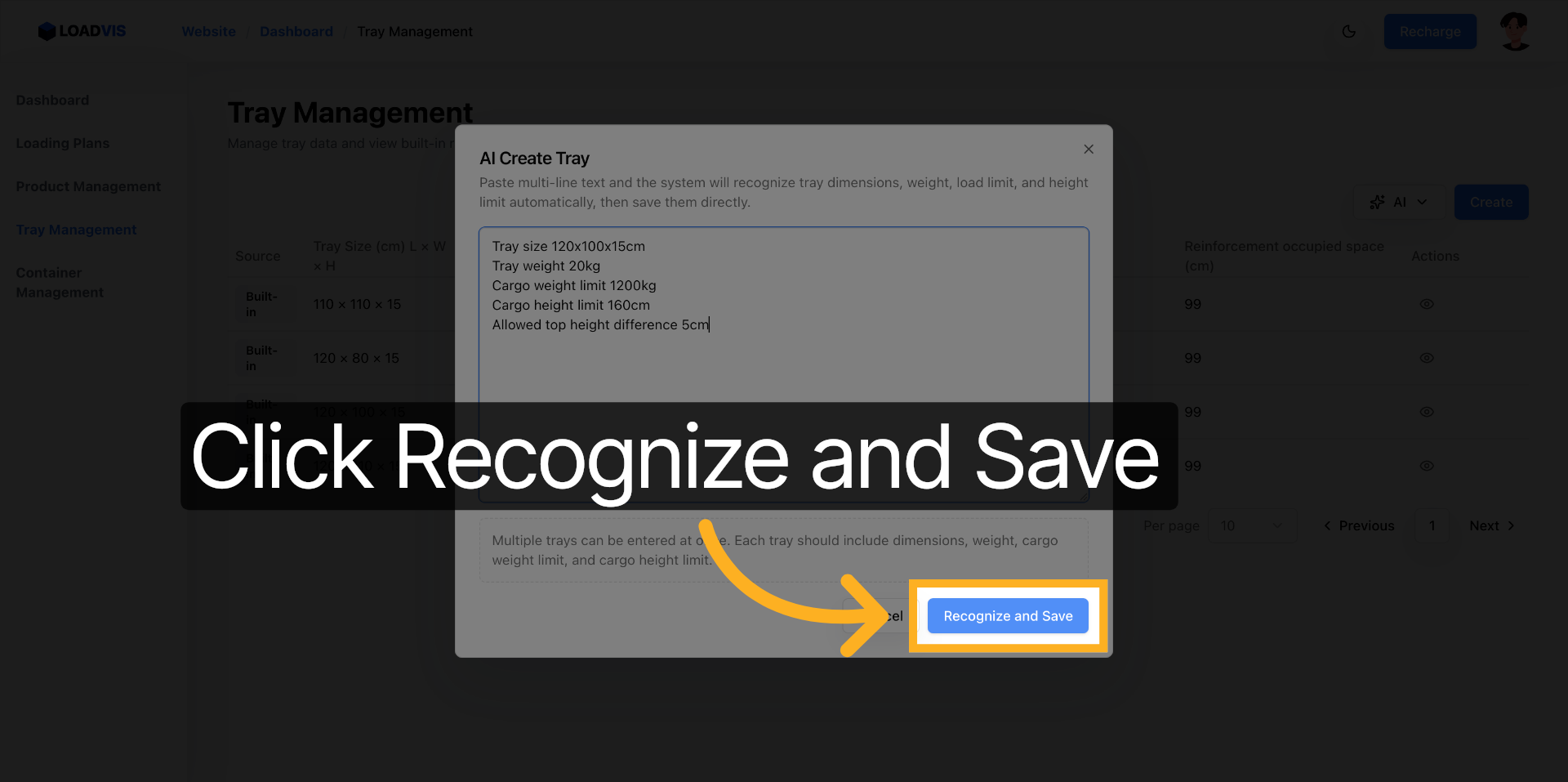
When you prefer to bypass the repetitive manual form entry, the workspace provides an automated ingestion pathway. You can leverage the AI parsing module to carry out the recognition of structured specification text. The system maps your raw description directly to the internal schema, stripping away manual transcription overhead.
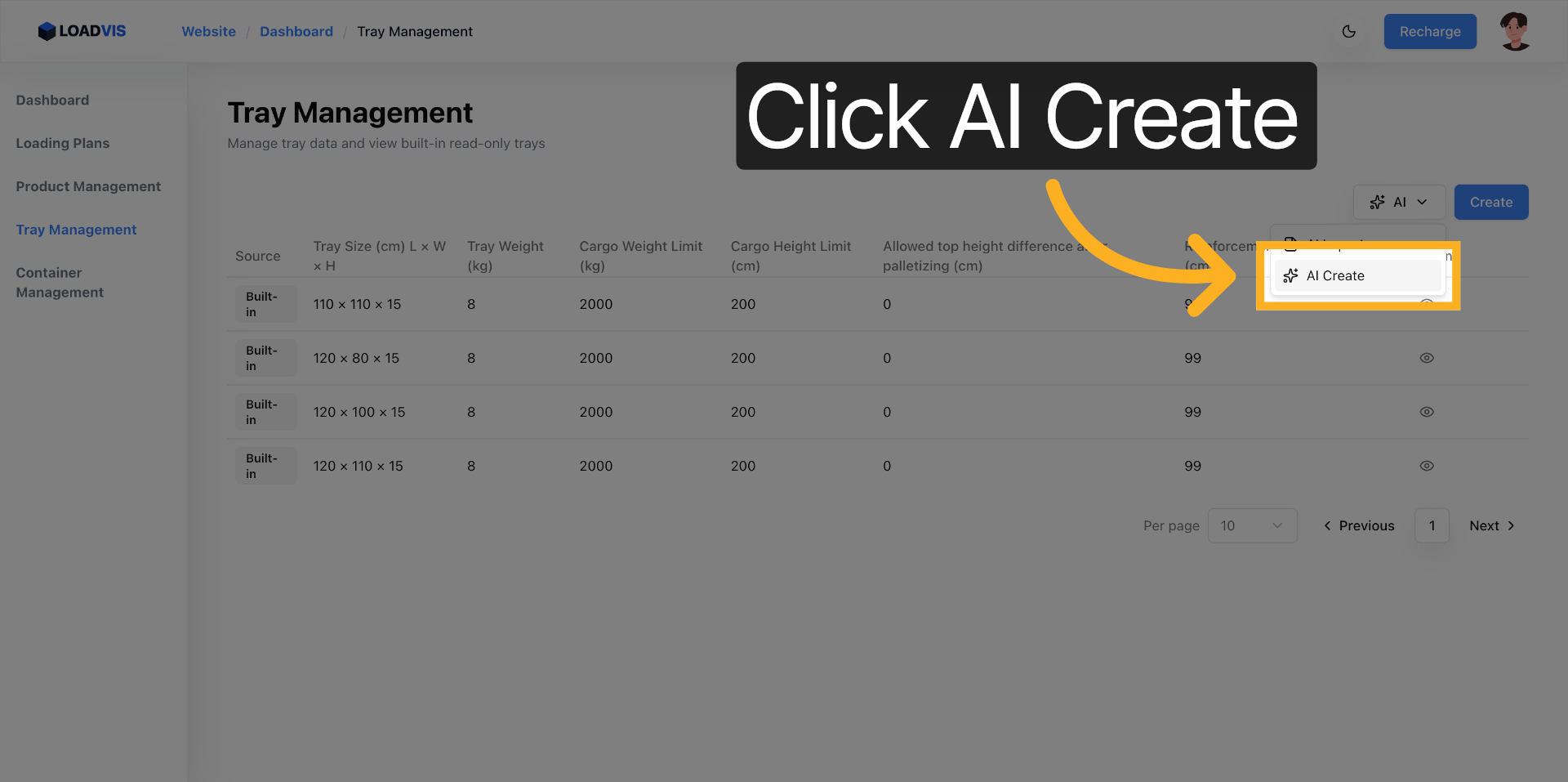
You input the raw string: dimensions, empty mass, rated capacity, vertical tolerance. The recognition engine carries out the extraction of each numerical entity. It populates the corresponding database fields automatically. You click the trigger, and the system completes the persistence operation. The pipeline functions smoothly, provided the input carries structural coherence.
4. Wrong Approach vs. Reliable Approach
Wrong Approach: You carry out the procedure of deploying a default 120×100×15 cm template. You bypass weight limits. You ignore clearance constraints. You run the solver. The dashboard displays a high volume rate. The warehouse encounters immediate rework. Uneven stacking forces manual redistribution. Weight overages trigger penalty invoices. Time evaporates.
Reliable Approach: You carry out a thorough verification of physical tray specs against supplier documentation or calibrated scales. You input exact bounding dimensions. You record the verified empty mass and the certified load rating. You explicitly define height tolerance, or you deliberately leave reinforcement fields empty only when the physical structure genuinely lacks top-layer restrictions.
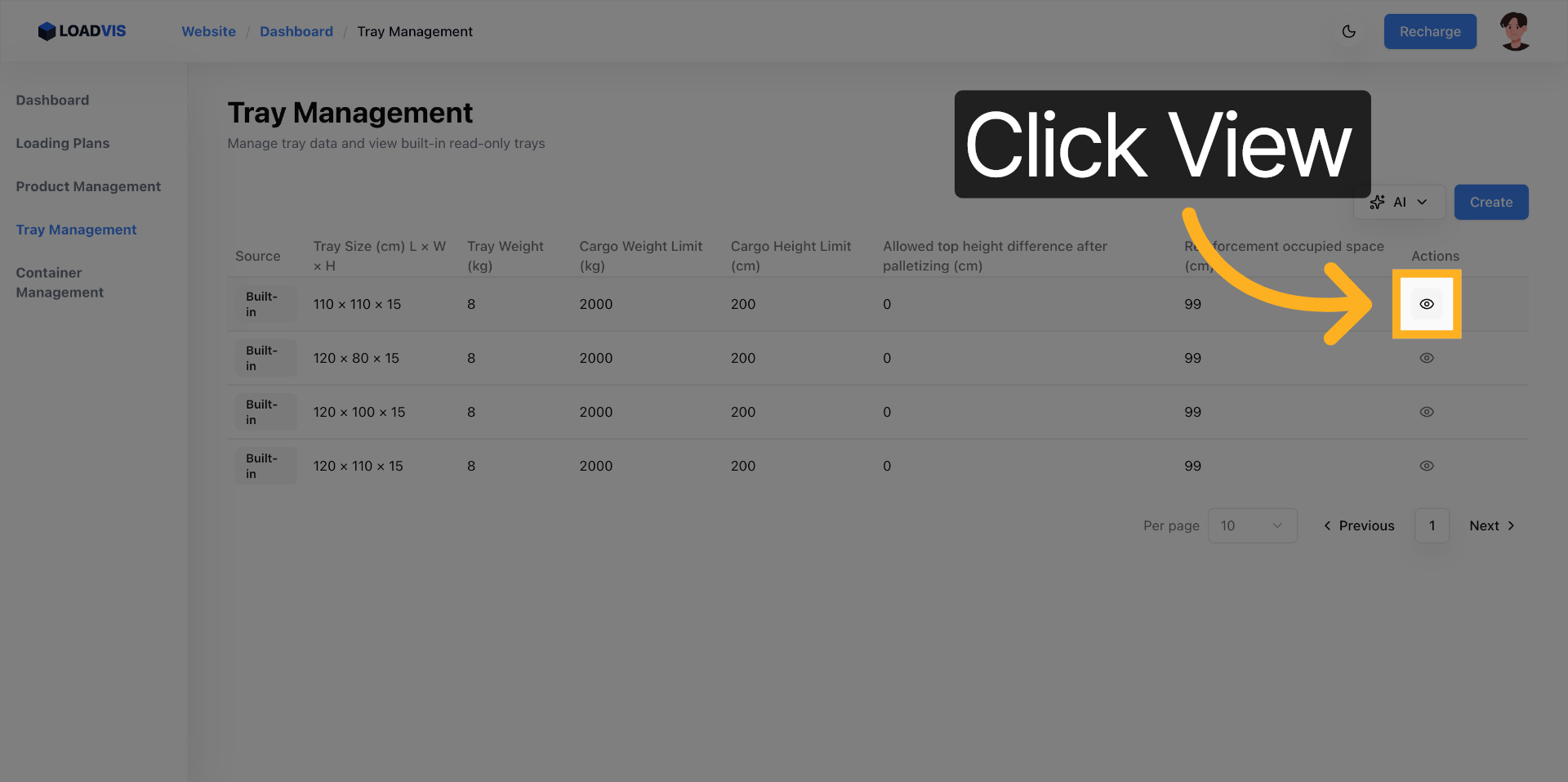
When you trigger the calculation with this constrained dataset, the reported volume utilization typically decreases by three to eight percent. That numerical drop feels counterintuitive. It should not. The algorithm now proceeds to execute its packing logic against actual physical interference zones and hard weight ceilings. The resulting scheme matches on-site clearance realities. Operators execute it directly. Zero adjustments required.
5. Tool Boundaries & Manual Confirmation
Automated routines efficiently carry out the transcription of structured specification sheets into system fields. The AI recognition and validation mechanisms prevent unit mismatches. They accelerate baseline setup. The system will parse dimensions, empty weight, and load thresholds accurately from standard textual formats.
The software cannot, however, physically inspect degraded pallets. It cannot verify site-specific forklift mast clearances. It cannot determine whether a supplier's theoretical load rating still applies to your current inventory condition after prolonged humidity exposure.
Manual confirmation remains an absolute prerequisite at specific operational checkpoints. You must carry out the verification of material grade against the actual physical stock. You need to adjust reinforcement clearance values based on your specific racking system or forklift engagement requirements. You must carry out a direct comparison of AI-parsed numbers against a physical sample or procurement spec sheet before initiating mass calculation runs.
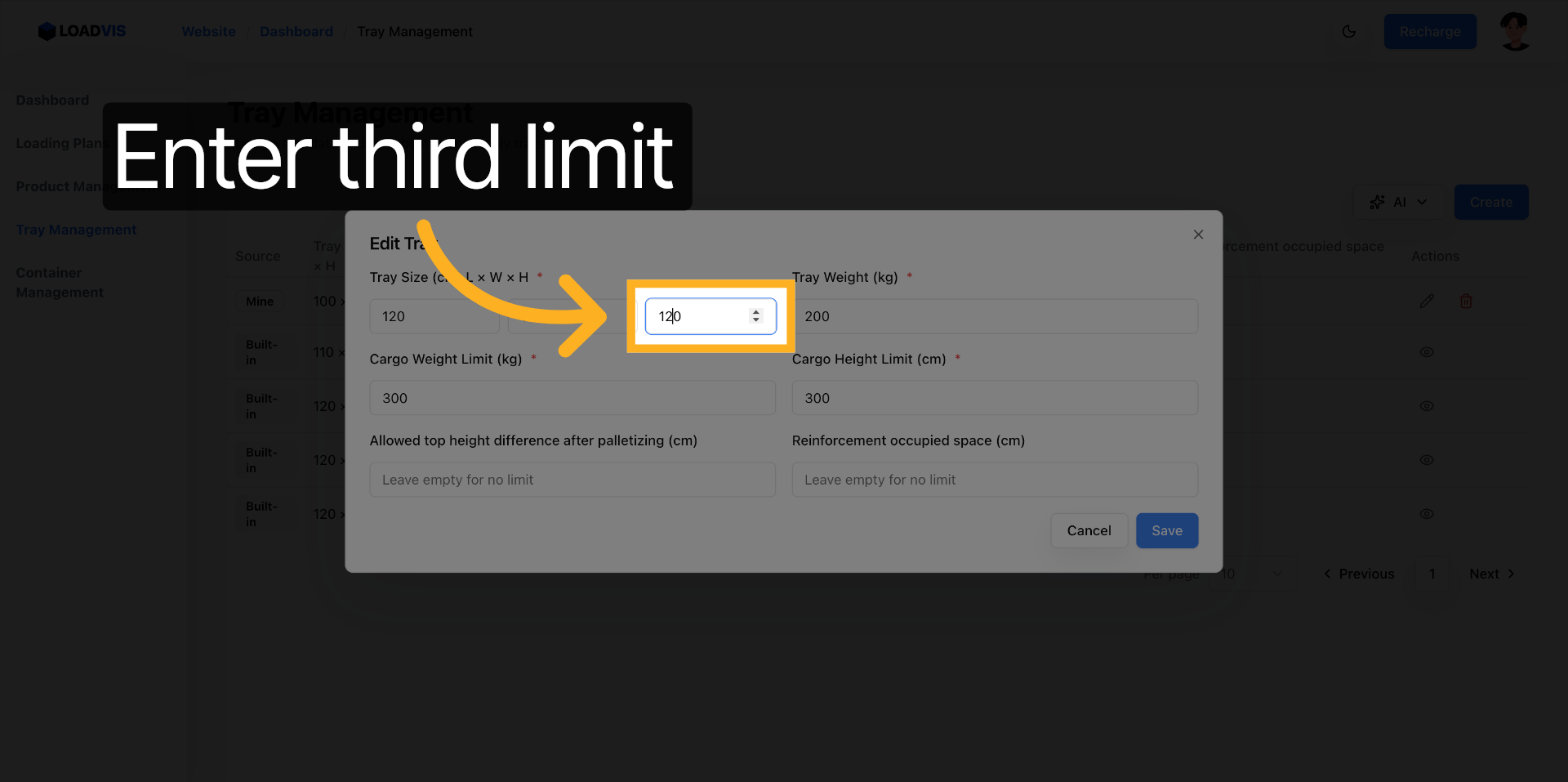
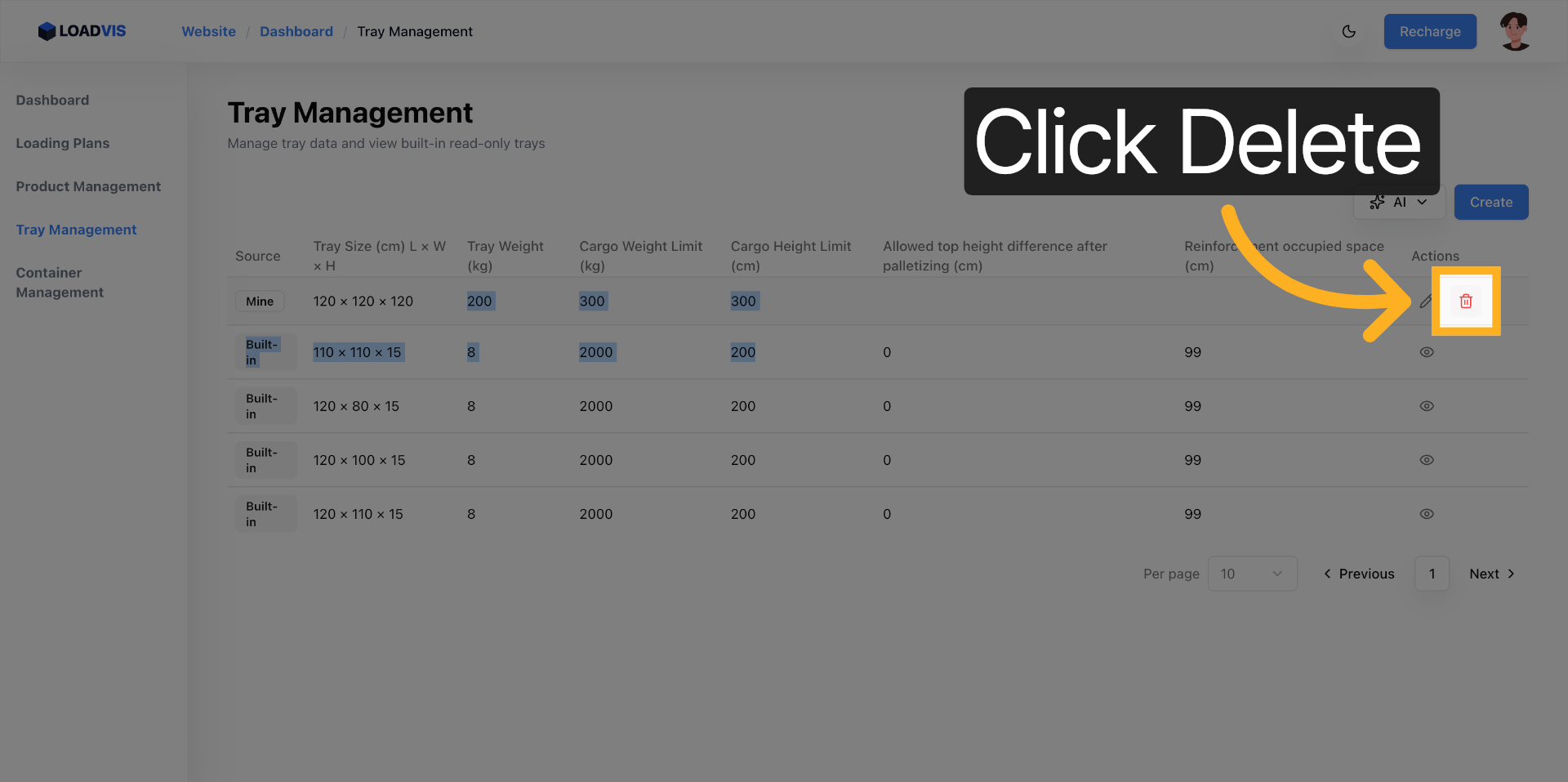
When legacy entries no longer align with current inventory reality, you initiate the deletion sequence to purge obsolete constraints. The interface prompts for explicit confirmation to prevent accidental registry corruption.
The optimization engine strictly proceeds with its calculations within the numerical boundaries you provide. It does not possess the capability to audit external physical degradation. It does not compensate for missing operational context.
6. Summary
Tray parameters establish foundational constraints. They do not function as optional metadata tags you populate to satisfy an interface requirement. Accurate configuration carries out the transformation of a theoretical rendering into a warehouse-ready execution manual.
You should utilize automated parsing to eliminate data entry friction. You must enforce physical verification as a mandatory checkpoint before executing any calculation cycle. A loading plan rigorously constrained by material reality will consistently outperform an unconstrained optimization scheme that stalls the moment it reaches the dock floor. The mathematics must reflect the physical inventory. Always.