Tray Parameter Deviation: Why High-Utilization Plans Fail On-Site
The dashboard displays 92 percent volume utilization. The solver completes its computational cycle in under four seconds. The geometric packing ratios appear mathematically pristine.
Then the trailer backs into the dock bay.
Silence. The forklift operator stares at the stack alignment. The bottom wooden tier buckles. The rear trailer doors refuse to engage fully. We have all observed this exact sequence unfold. It never originates from a defective routing heuristic. The structural fracture resides within a single database row that a planner populated three months ago while simultaneously monitoring inbound manifests. Inaccurate tray master data transforms theoretically optimal load configurations into physical impossibilities. You establish the spatial parameters. The engine enforces them. The execution crew absorbs the operational penalty.
Planning desks habitually treat pallets as standardized, interchangeable placeholders. They assume a rigid 120×100×15 centimeter block carrying exactly 20 kilograms of dead weight. The optimization engine focuses its computational resources on SKU dimensional matrices and container internal geometry. Physical reality operates on entirely different principles. Structural voids within composite decking. Fluctuating moisture content altering board thickness. Dynamic load tolerances that actively redistribute axle stress during transit. When these physical attributes undergo approximation or complete omission, the constraint solver yields layouts that exist perfectly on screen yet collapse immediately under gravity. The error propagates across every downstream routing simulation that references that corrupted template.
Key Operations Extracted and Why They Dictate Execution
You must carry out the systematic configuration of tray parameters with deliberate operational friction. Raw throughput velocity actively degrades accuracy in this domain. The workspace provides accelerated pathways for data ingestion, but acceleration devoid of structural validation compounds execution debt.
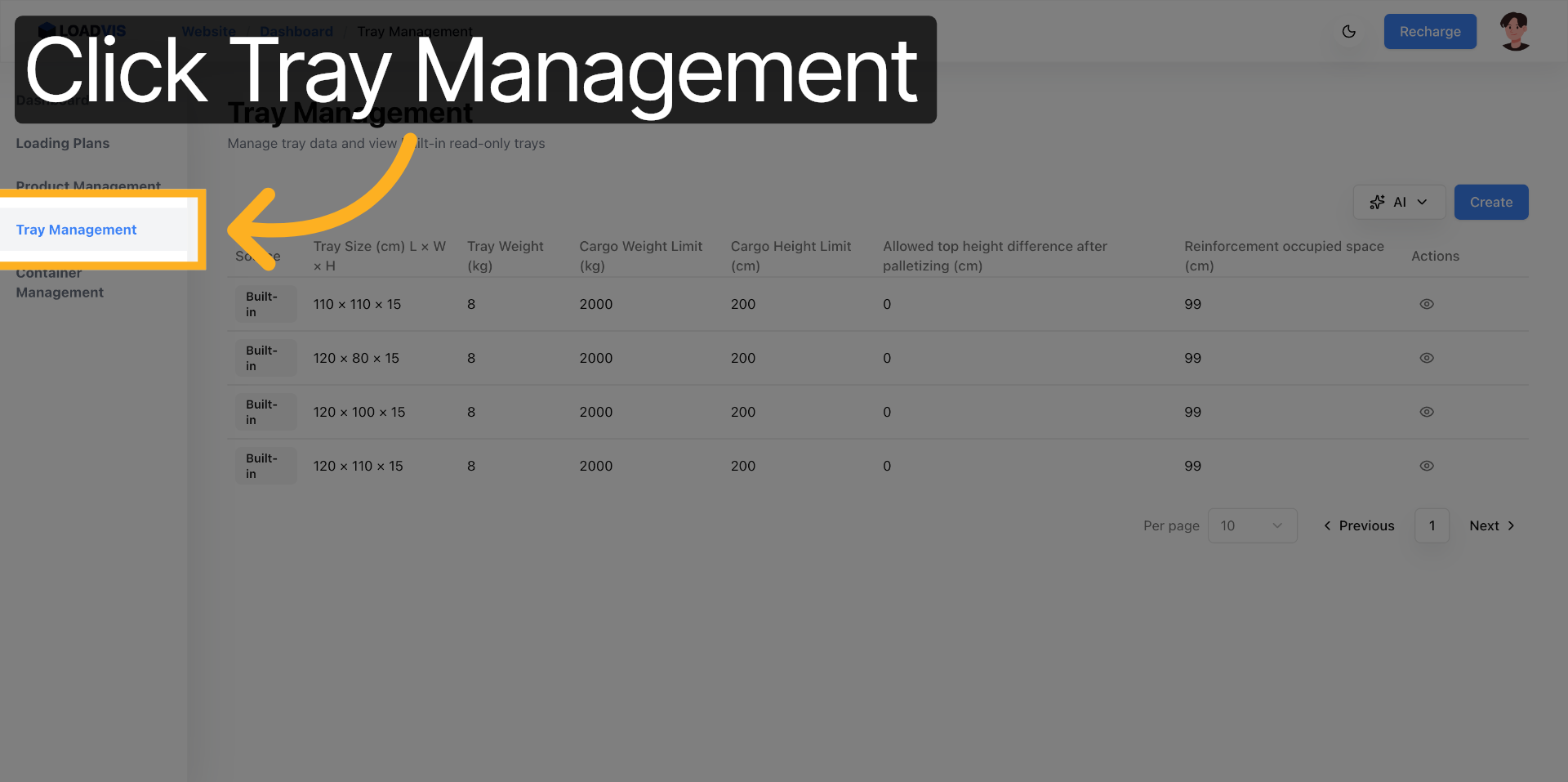
Let us examine the automated ingestion pathway. You initiate the AI Create module to carry out the bypassing of manual data entry routines. You paste a structured specification string directly into the recognition input field. The parsing engine extracts tokens and maps them to corresponding dimensional constraint fields. The workflow proceeds without resistance only when you enforce explicit unit delimiters.
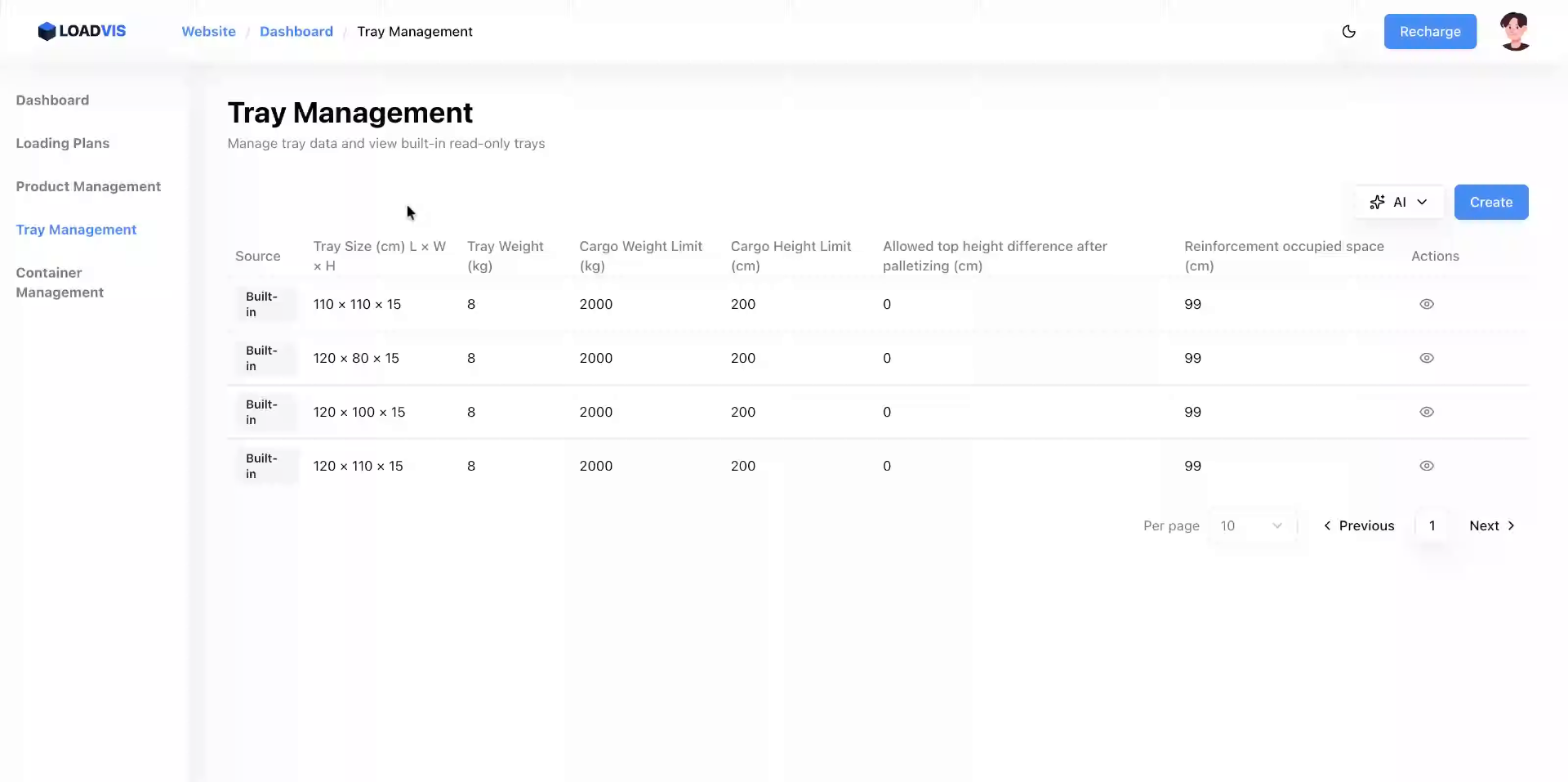
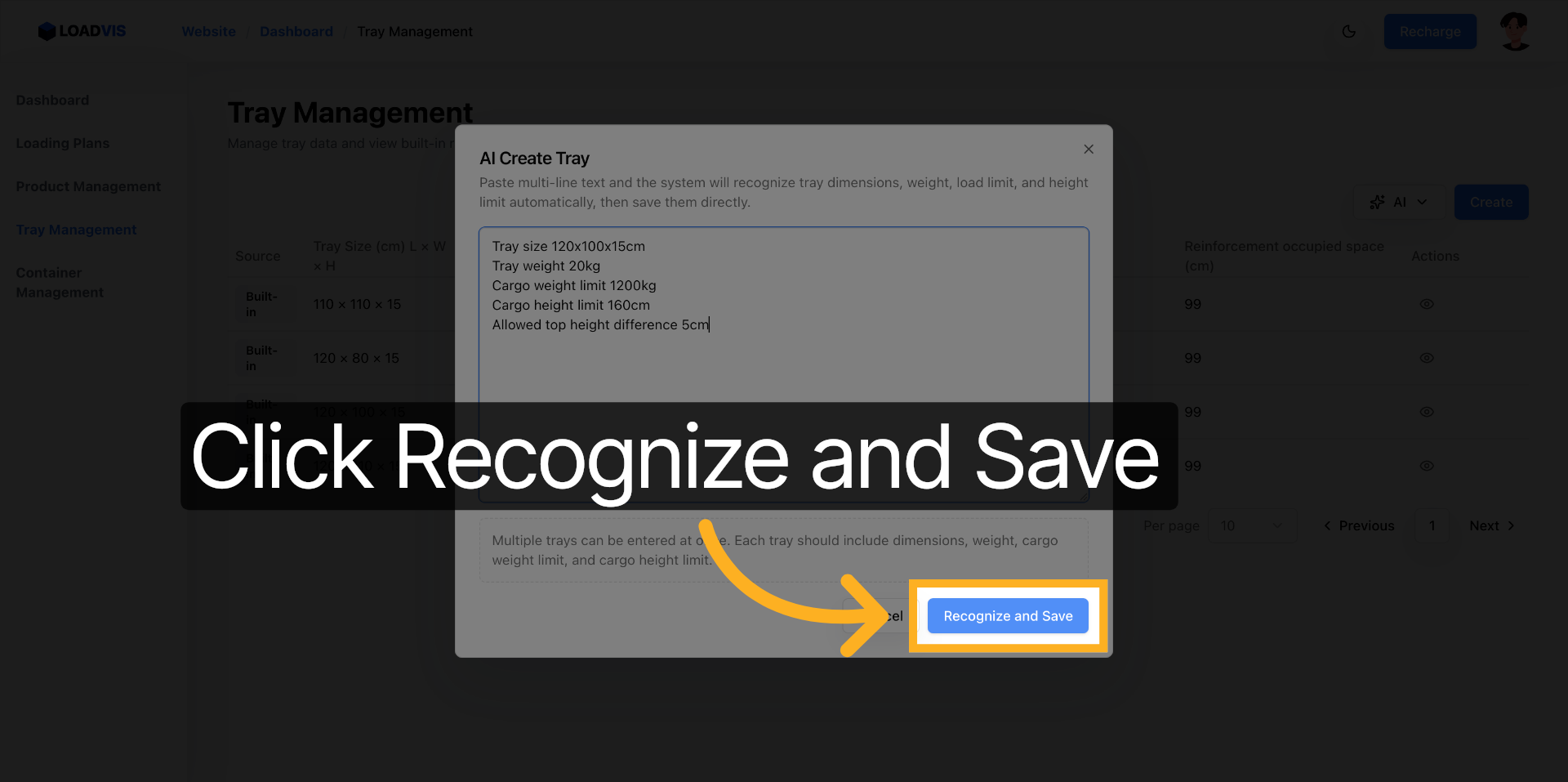
You engage in interaction with the recognition confirmation prompt to activate AI-assisted parameter extraction. The interface transitions into the intelligent tray parsing environment.
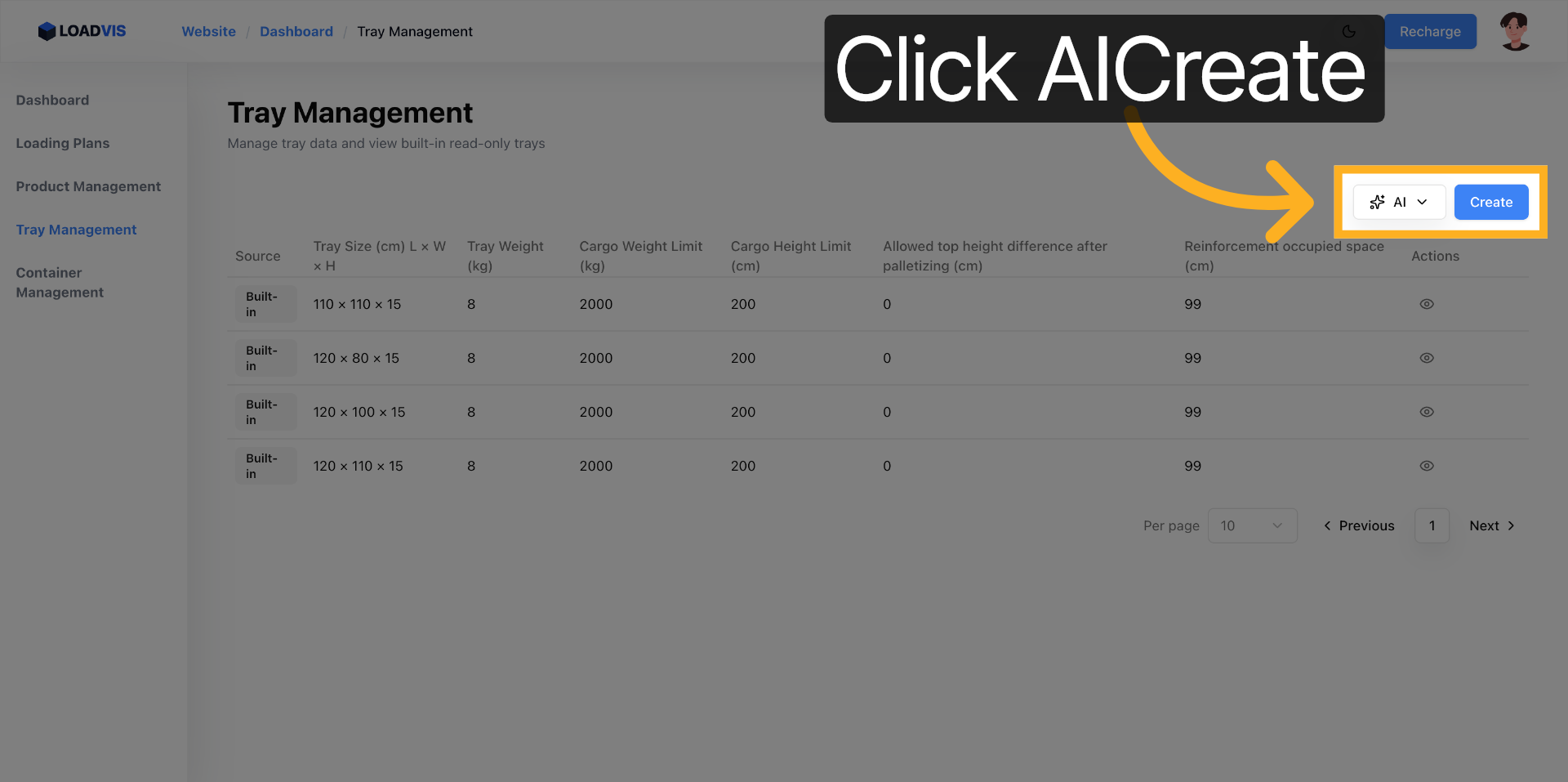
You proceed to carry out the inputting of tray specification details within the text entry field. For instance, supplying Dimensions: 120×100×15 cm | Self-Weight: 20 kg | Max Load: 1,200 kg | Max Cargo Height: 160 cm | Allowable Top Tolerance: 5 cm. The recognition subsystem will automatically carry out the extraction of numerical values and perform the mapping of each discrete metric to its corresponding configuration field.
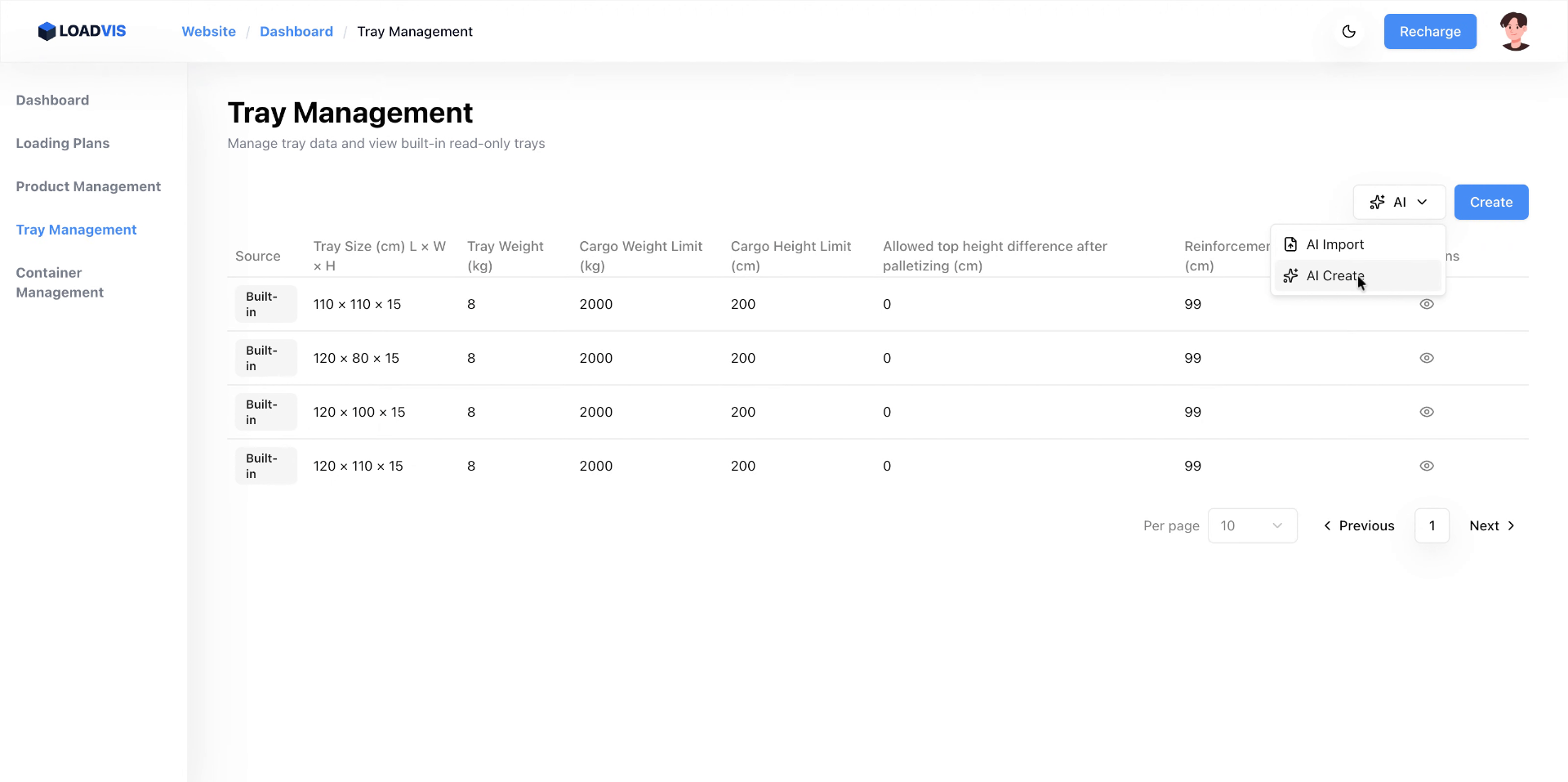
You execute the Recognize and Save command. The system will carry out the finalizing of text parsing operations and proceed to commit the recognized tray parameters into persistent storage, thereby concluding the configuration creation workflow.
Why does this specific sequence carry operational weight? The tray self-weight metric subtracts directly from gross vehicle payload allowances. A ten kilogram miscalculation per position multiplies silently across thirty loaded slots. That deviation quietly shifts the longitudinal centroid balance. Transport compliance regulations do not accommodate rounding convenience.
Reinforcement clearance functions as the physical breathing zone required for fork tine penetration. You should leave the field unpopulated only when the base architecture genuinely lacks structural obstructions. If the system defaults to a zero value and you accept it without scrutiny, the stacking algorithm assumes flush adjacency. The forklift impacts physical decking on site. The unloading workflow halts immediately.
Maximum cargo load thresholds and vertical height boundaries directly constrain the layering heuristic. Overstate them, and the bottom tier experiences compressive failure under transit vibration. Understate them, and you waste cubic airspace while eroding freight margins. The AI parser accelerates ingestion velocity, but it lacks the capacity to differentiate between vendor marketing shorthand and structural engineering limits. Unverified acceptance converts ambiguous phrasing into rigid constraint boundaries.
Wrong Approach versus Reliable Approach
We need to establish an unambiguous boundary between fragile configuration templates and robust parameterization workflows.
❌ Fragile execution path: Inputting 120x100x15, load 1000 without appending explicit unit markers. Assuming reinforcement clearance carries zero operational relevance. Bypassing the self-weight entry field completely. Clicking through the AI recognition output without conducting a manual cross-examination routine. You generate a brittle template. Multi-container balance calculations fracture instantly. Dock crews resort to dangerous improvisation to compensate for spatial mismatches.
✅ Reliable execution path: Supplying machine-readable text directly into the recognition engine. Manually carrying out the verification of mapped fields against physical supplier specification sheets. Conducting dimensional measurements of the reinforcement clearance against the actual fork tine dimensions present in your yard fleet. Opening the detail view to carry out the comprehensive auditing of constraint boundaries prior to committing the finalized configuration to storage. You must treat tray parameterization as a physical boundary definition. It governs spatial stacking logic, not administrative data entry.
Tool Capabilities versus Required Manual Confirmation
Where does the platform draw the operational line between automation and human intervention?
🛠 The system excels at carrying out automated text-to-structure translation routines. It enforces mandatory field validation protocols. It implements a two-step deletion confirmation mechanism to prevent the creation of orphaned plan references. It centralizes reusable tray assets across multiple routing simulations. Manual transcription discrepancies vanish. Field formatting undergoes standardization automatically.
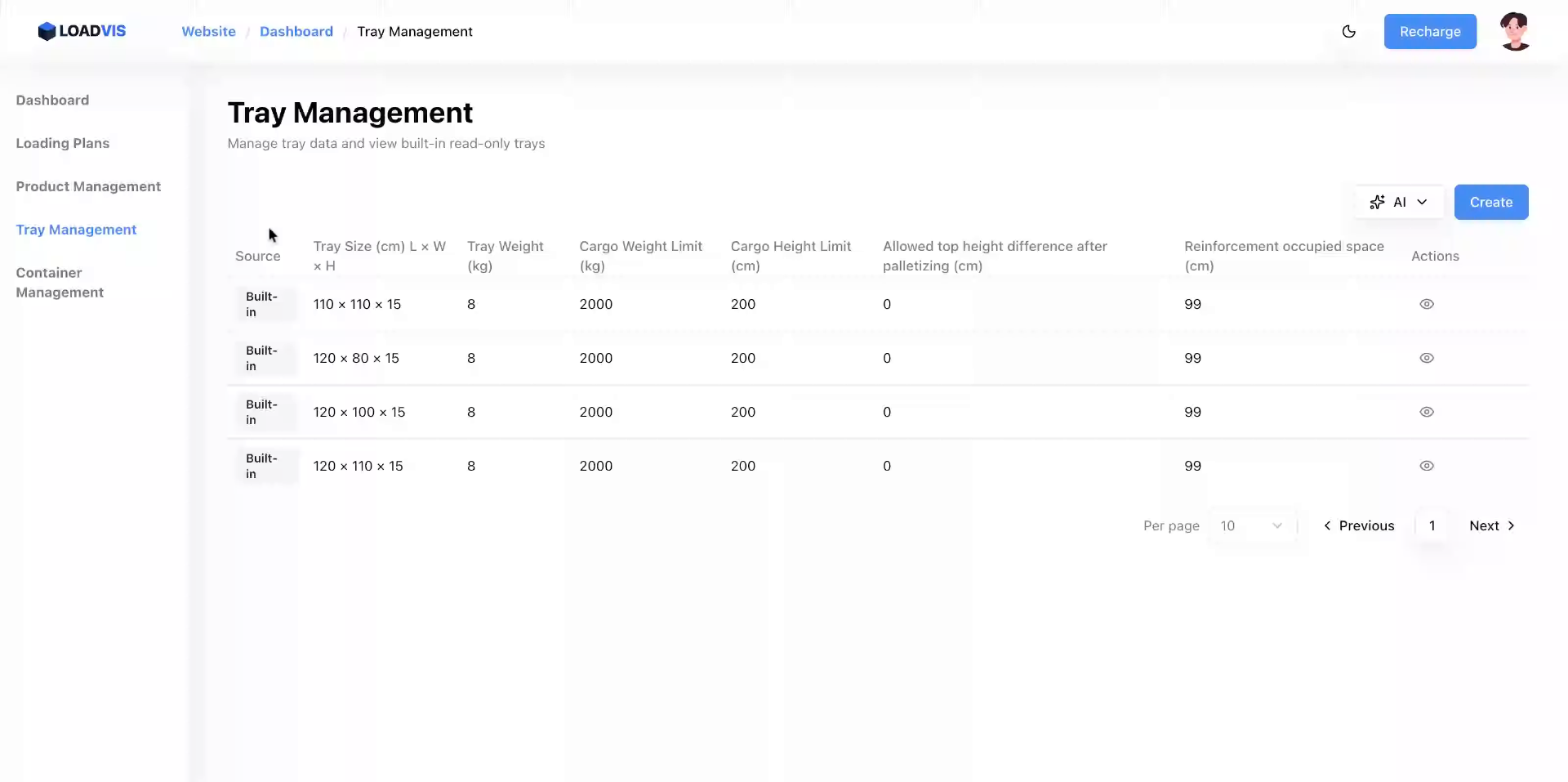
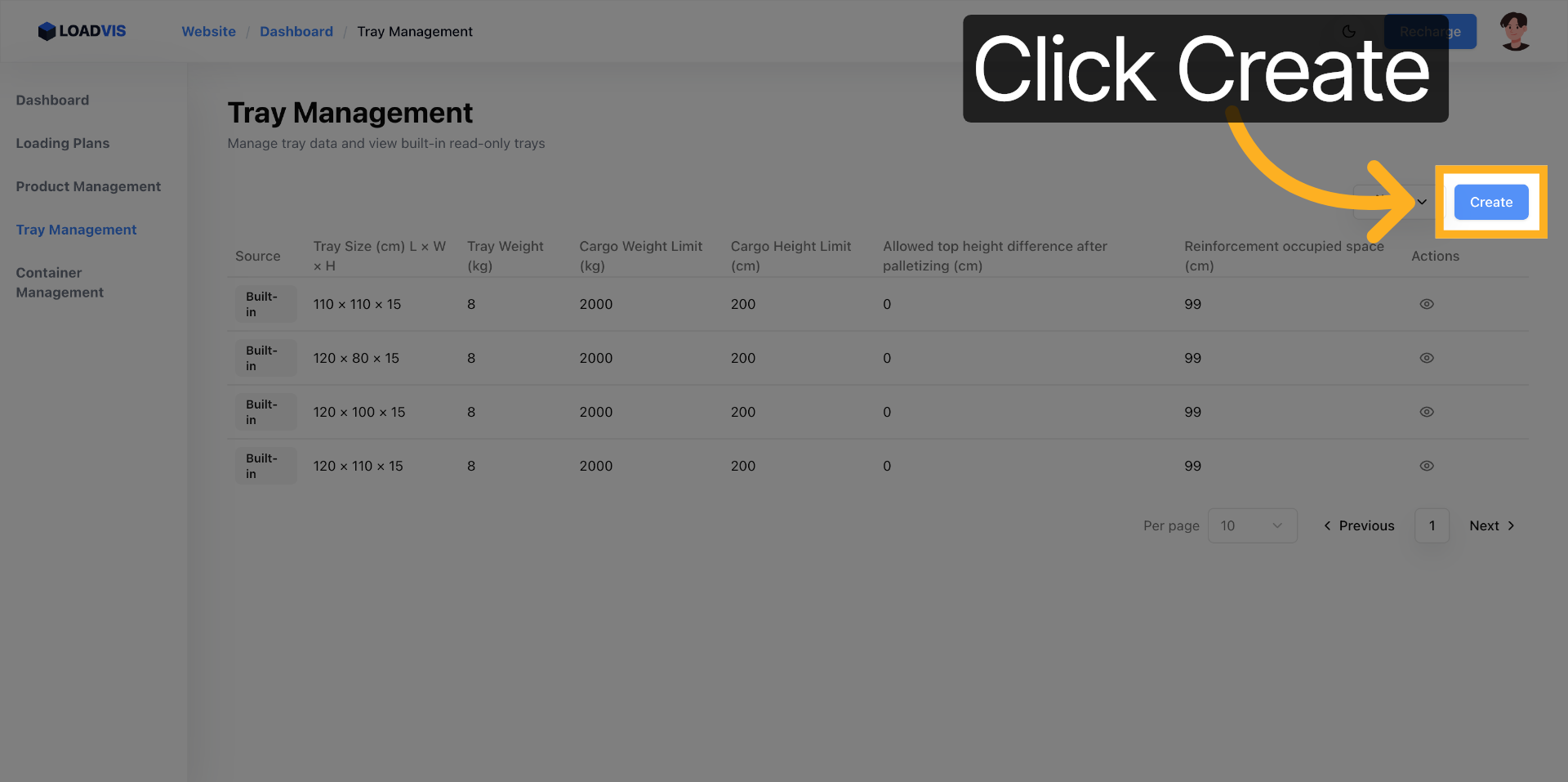
You enter the manual creation workflow to carry out the step-by-step inputting of dimensional parameters. You specify width, height, and length values explicitly to establish the physical envelope.
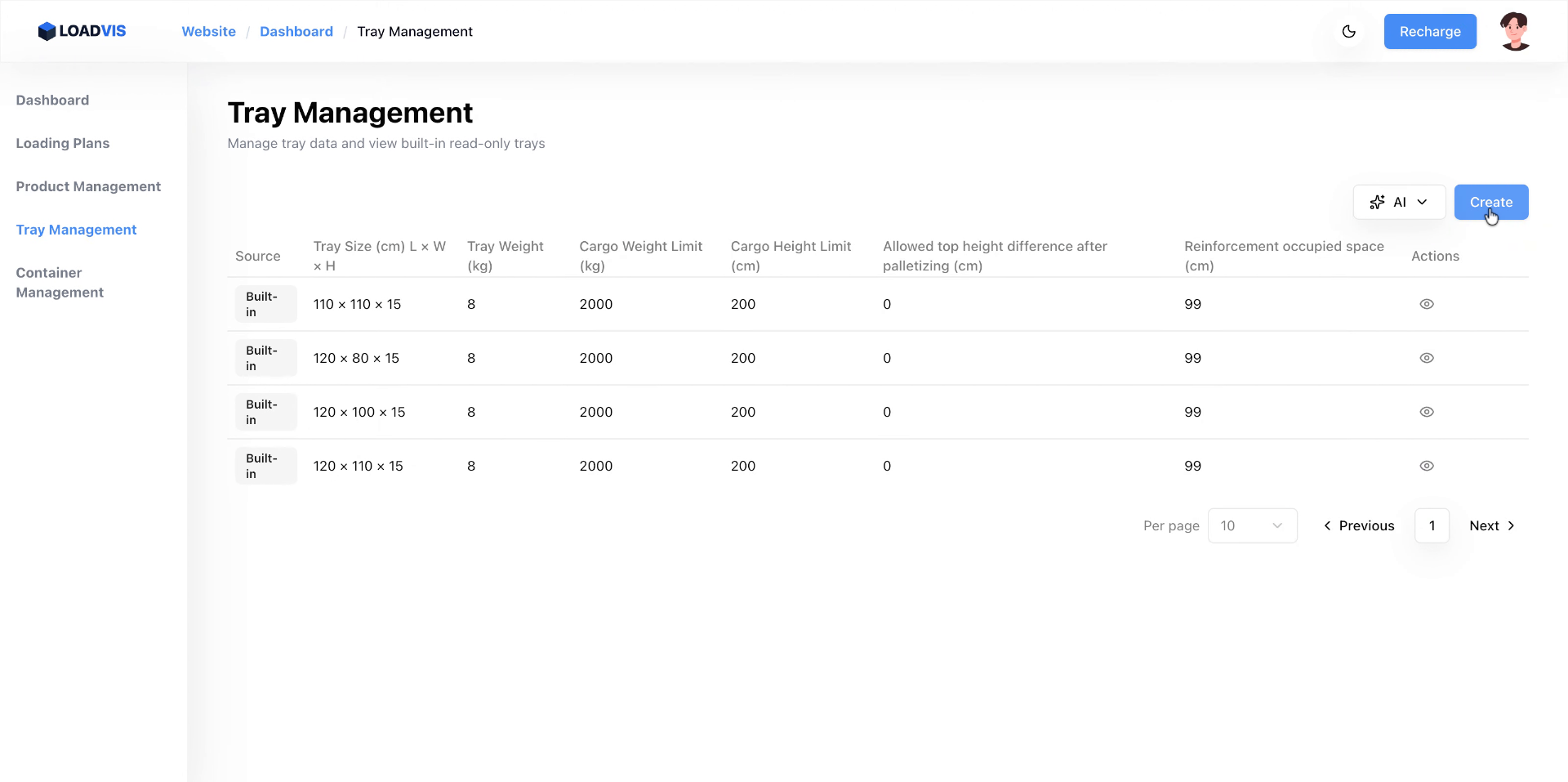
You proceed to carry out the definition of weight and load capacity constraints. Entering the self-weight value ensures the system incorporates dead mass into total load calculations. Defining the maximum cargo load establishes the rated carrying threshold.
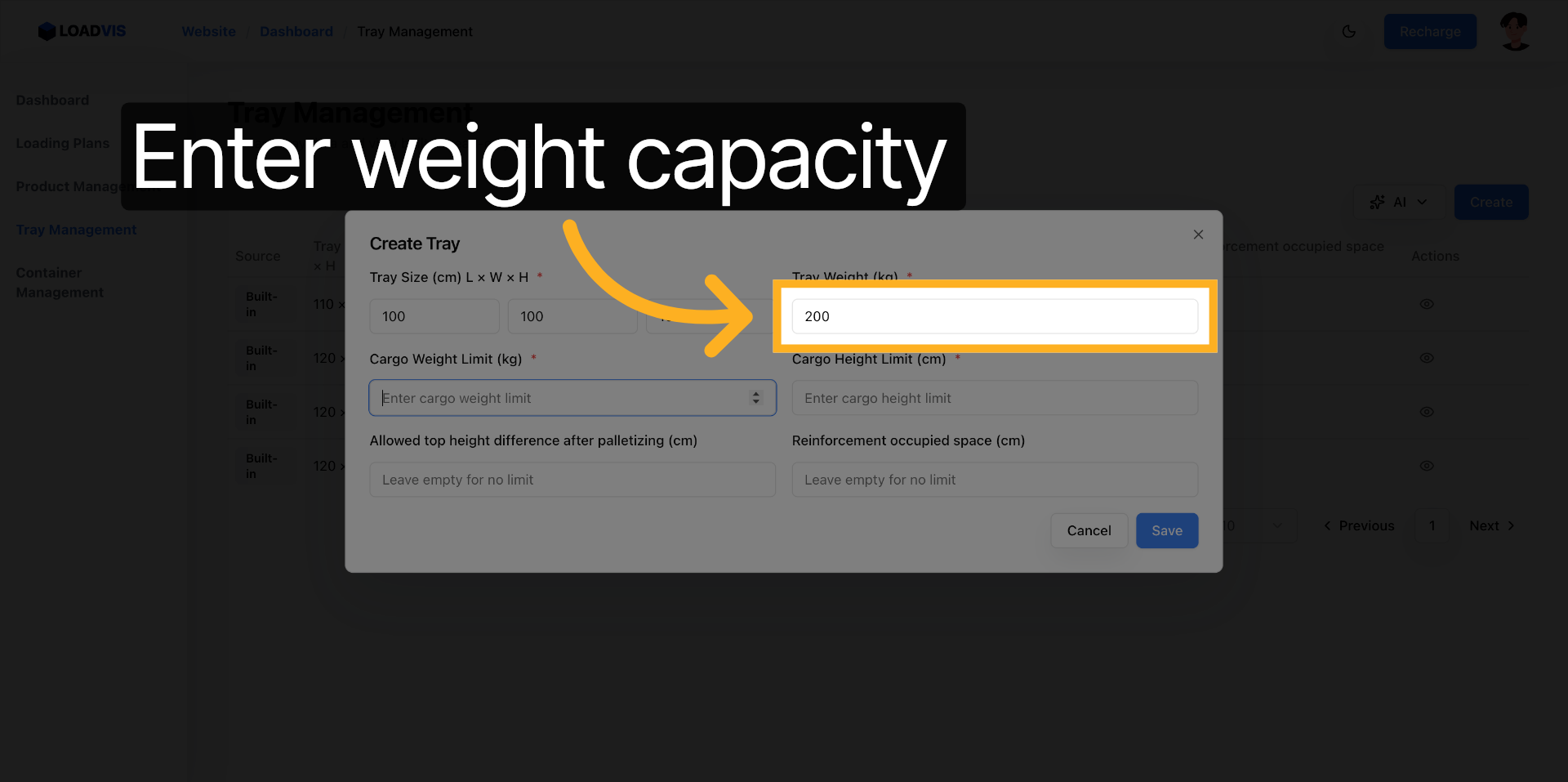
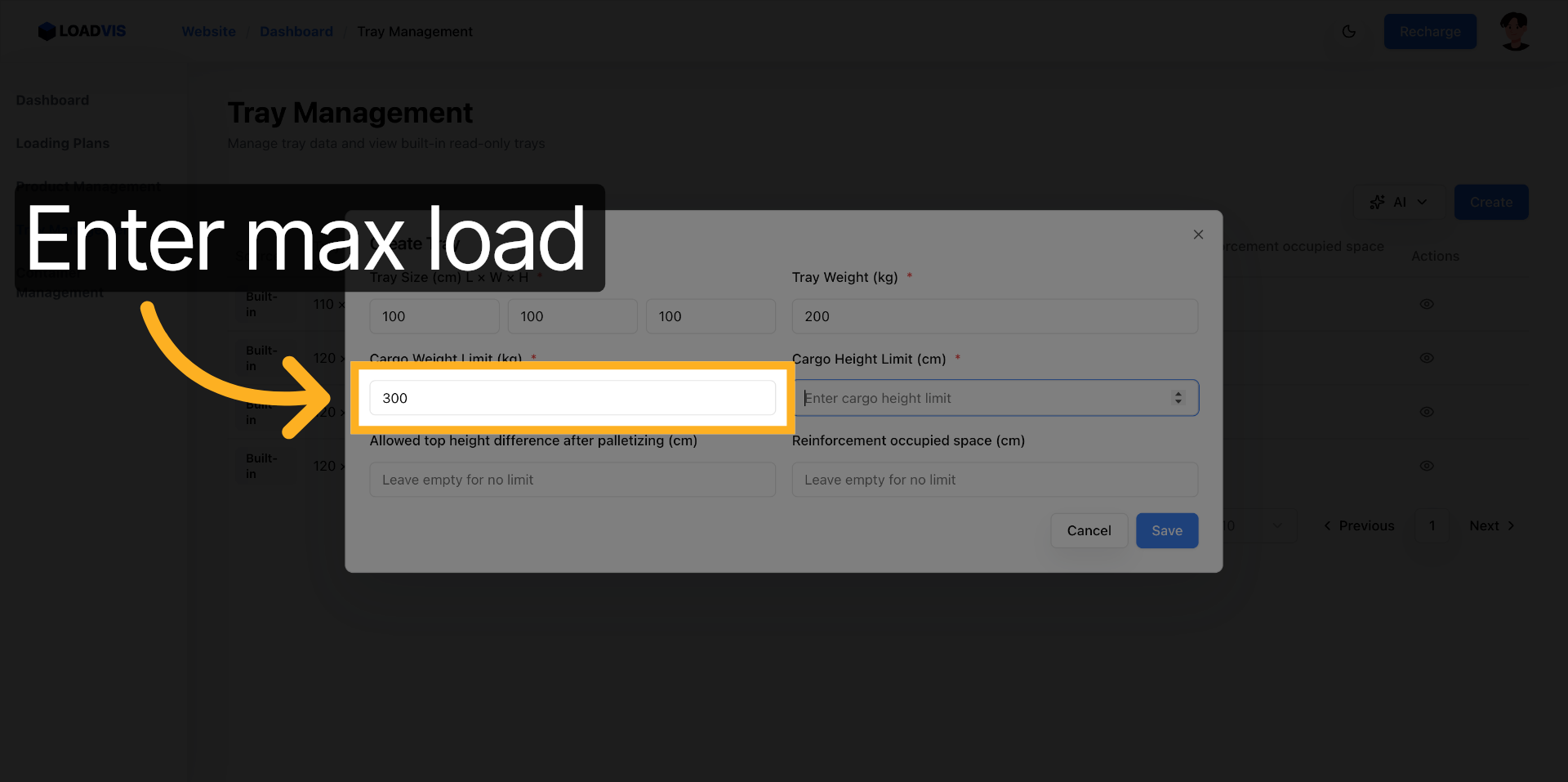
You conduct the final validation pass to verify field alignment before initiating the save routine.

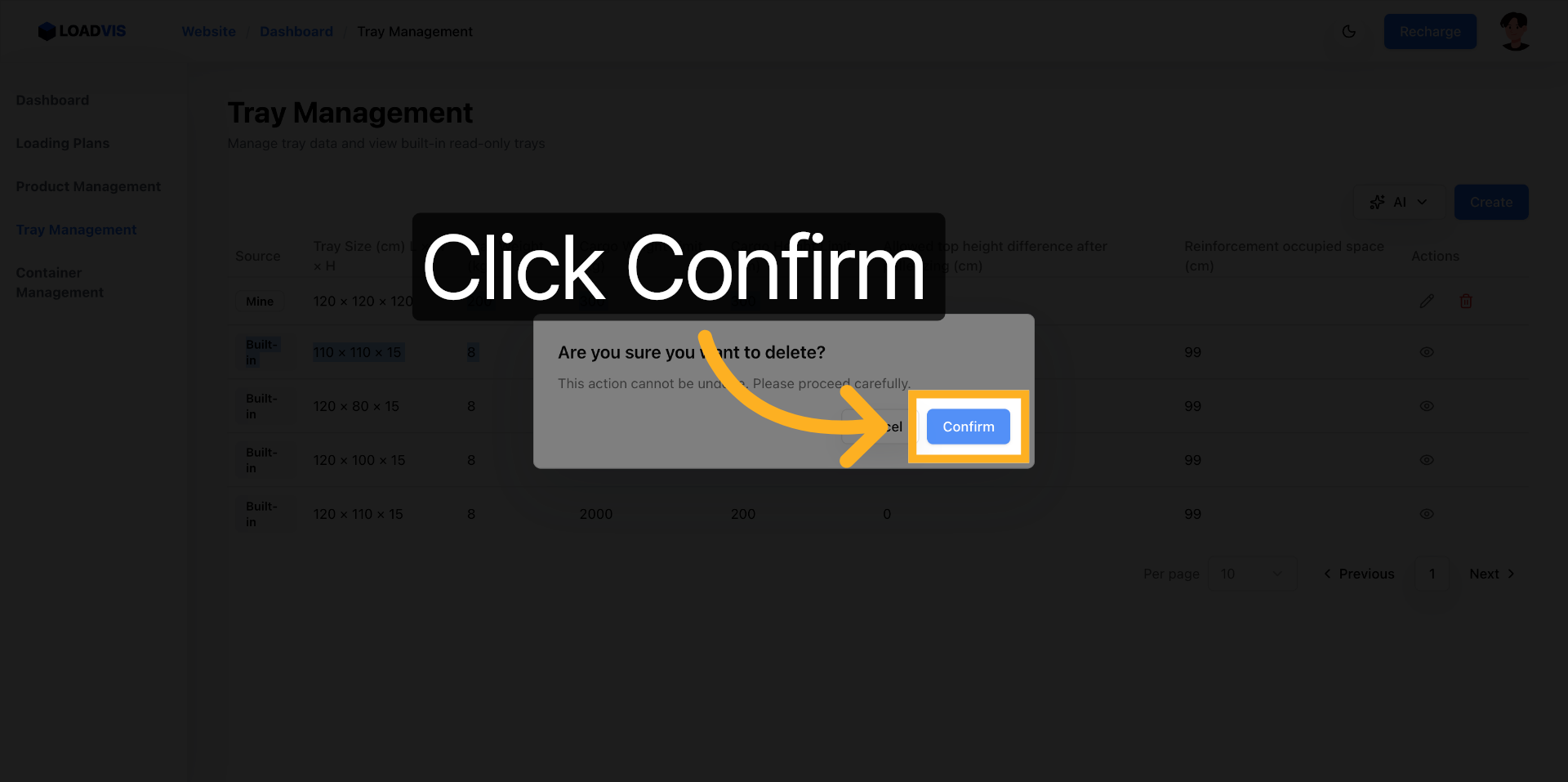
When data becomes obsolete or incorrectly structured, you carry out the targeted removal of tray records through the deletion interface. The confirmation prompt forces a deliberate pause to prevent irreversible data loss.
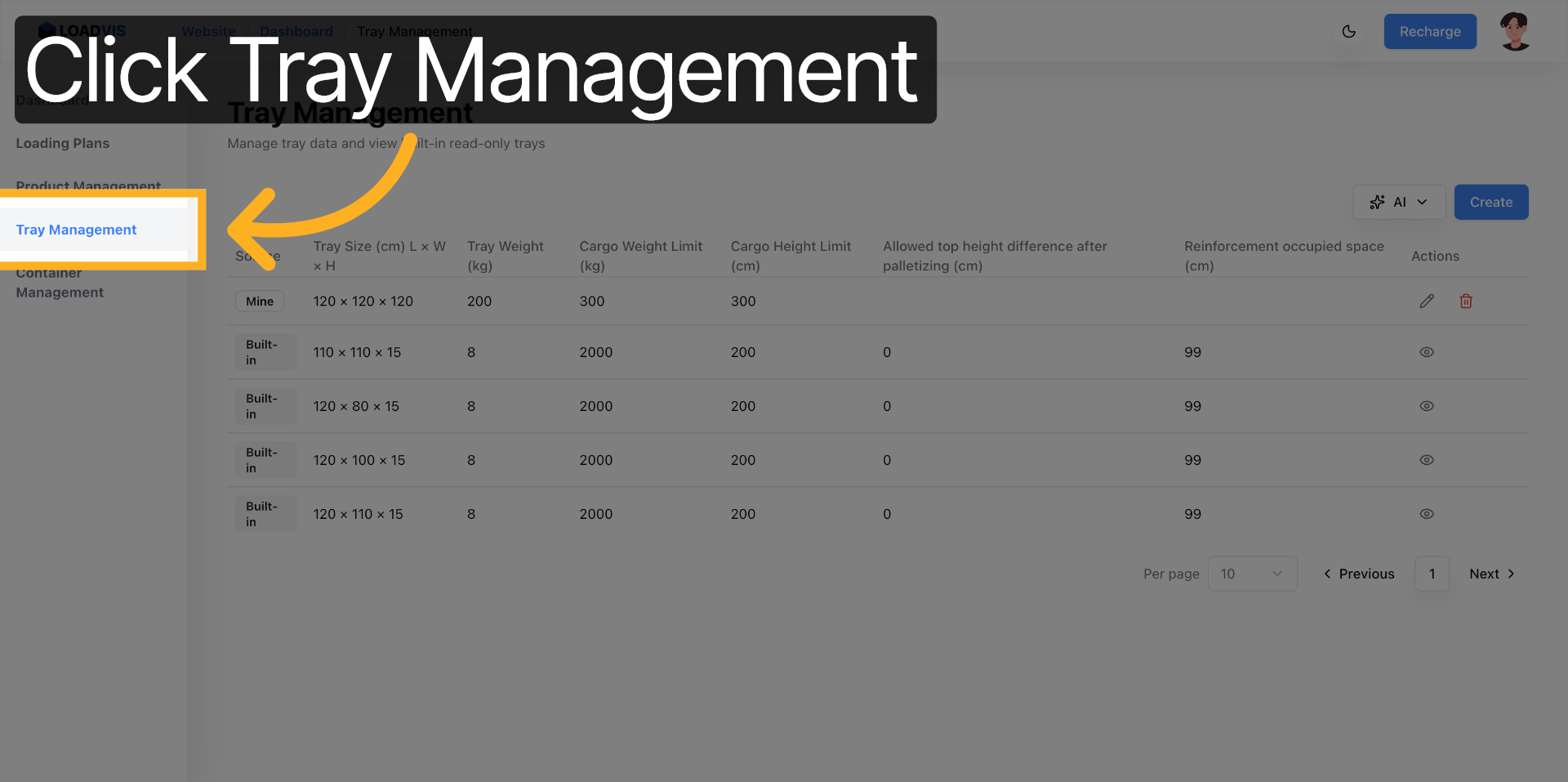
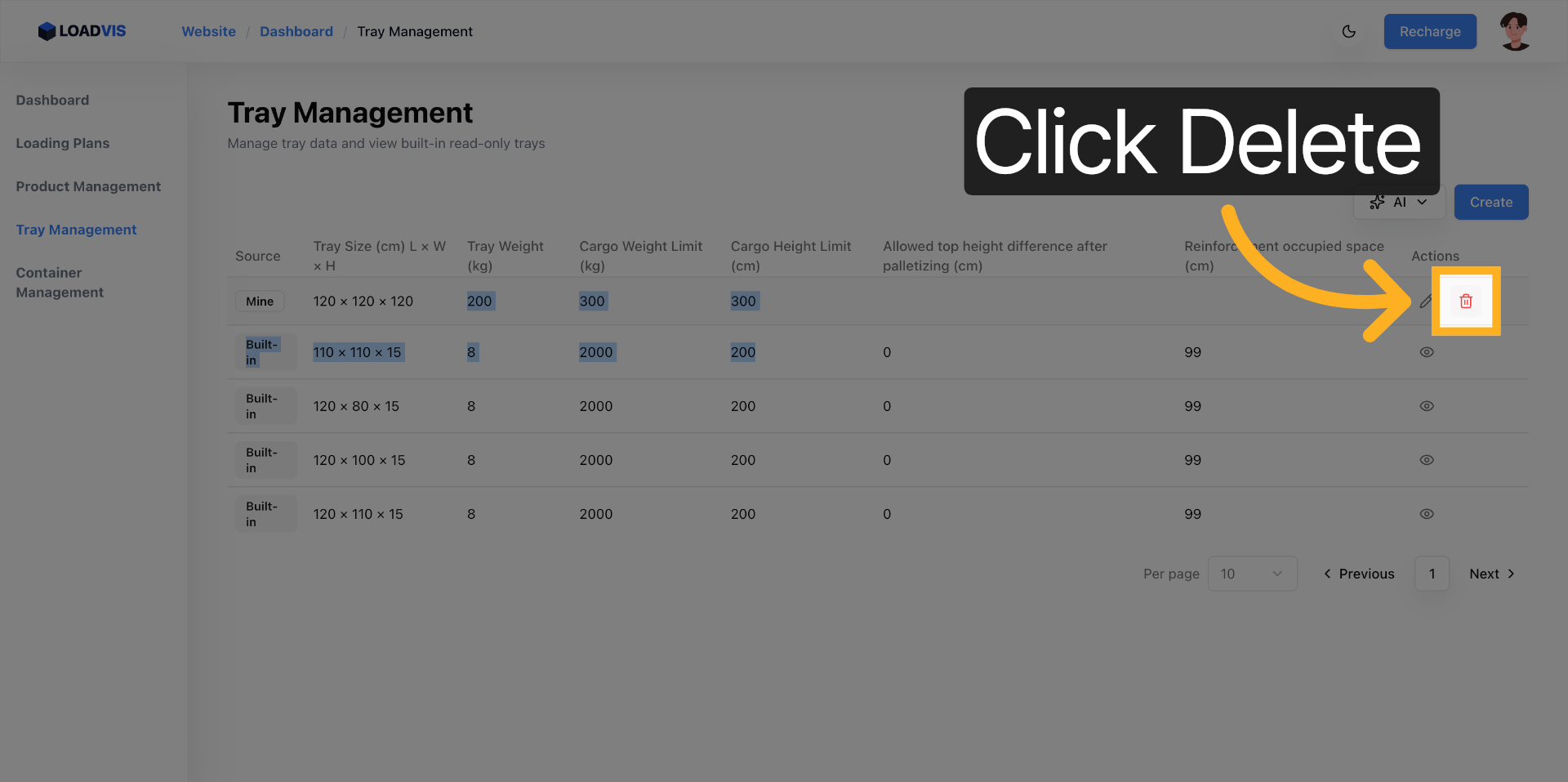
✍️ You must still carry out physical measurement tolerance verification routines. Acceptable manufacturing variance typically resides within a ±0.5 centimeter operational band. You need to cross-reference the reinforcement clearance against warehouse forklift fleets rather than relying on theoretical engineering diagrams. You must conduct the validation of load limits against dynamic handling conditions, because static manufacturer ratings completely ignore sudden deceleration forces and lateral cargo shifting. The platform cannot replace field calibration. It cannot force procurement and logistics divisions into alignment.
When you modify existing parameters through the editing interface, you carry out targeted adjustments to width, height, or clearance metrics. You carry out the intentional leaving of the reinforcement clearance field unpopulated strictly when the base structure presents an entirely unobstructed entry surface.
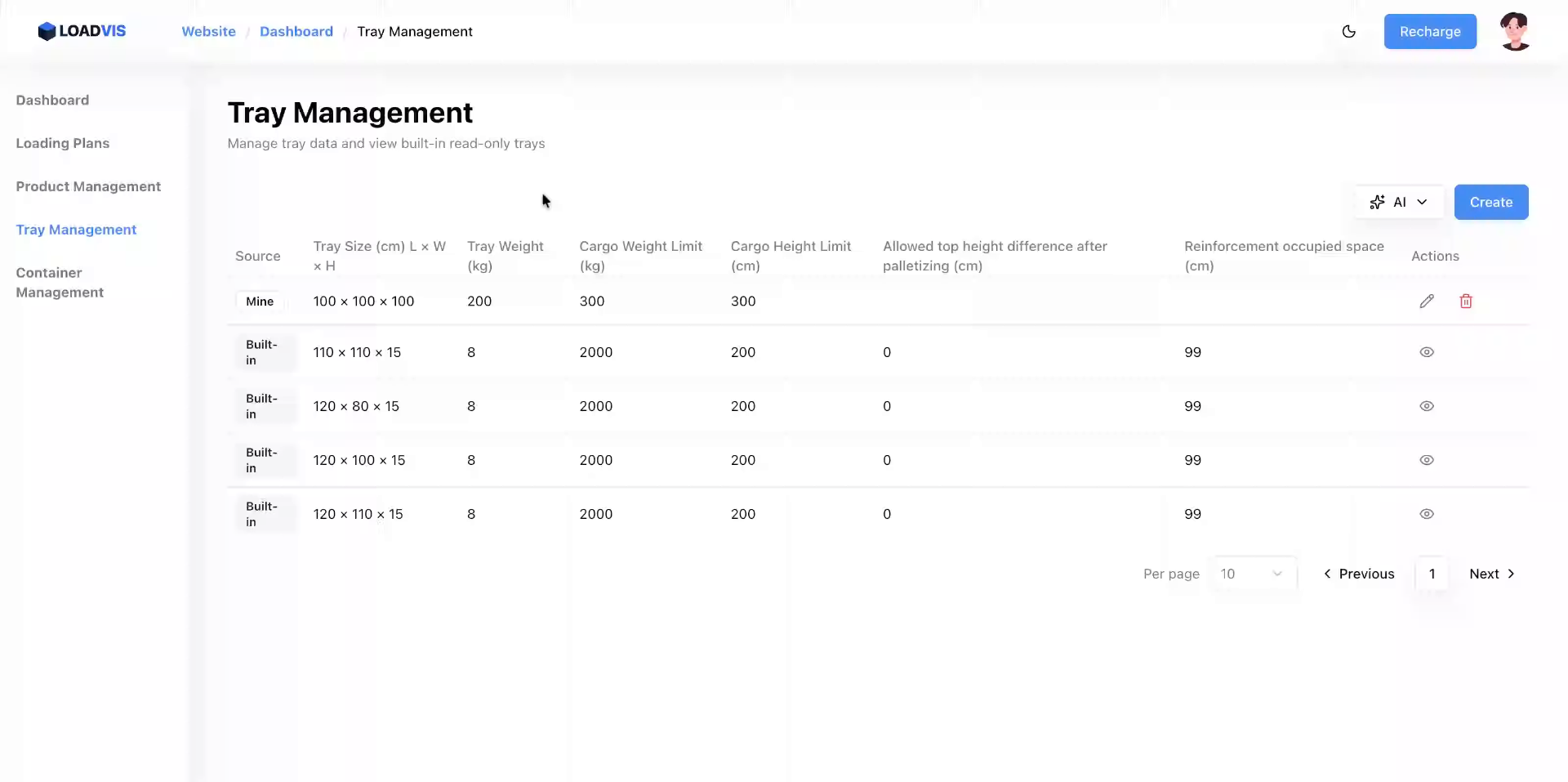
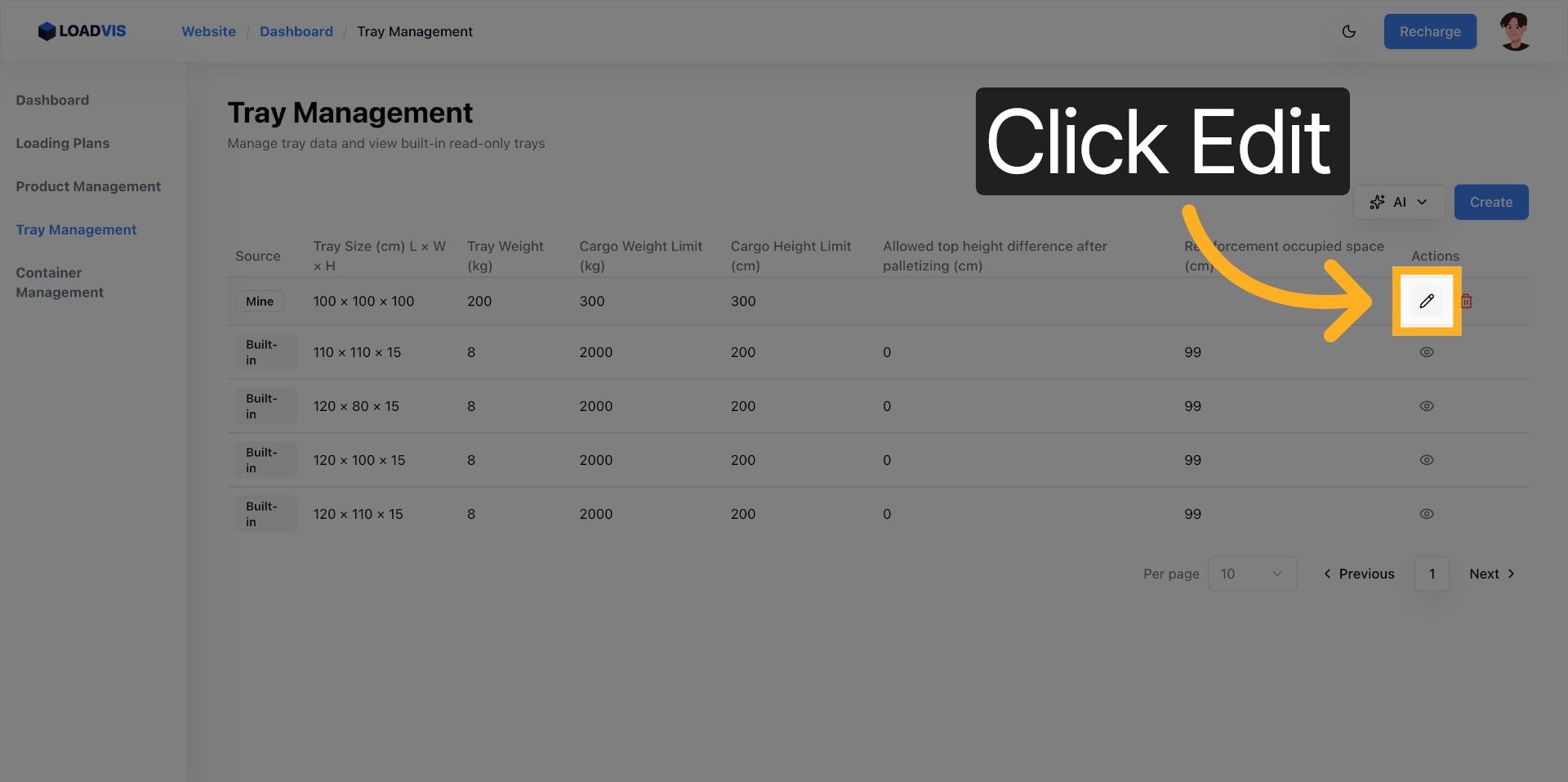
You proceed to update the width and height fields to reflect corrected physical dimensions.
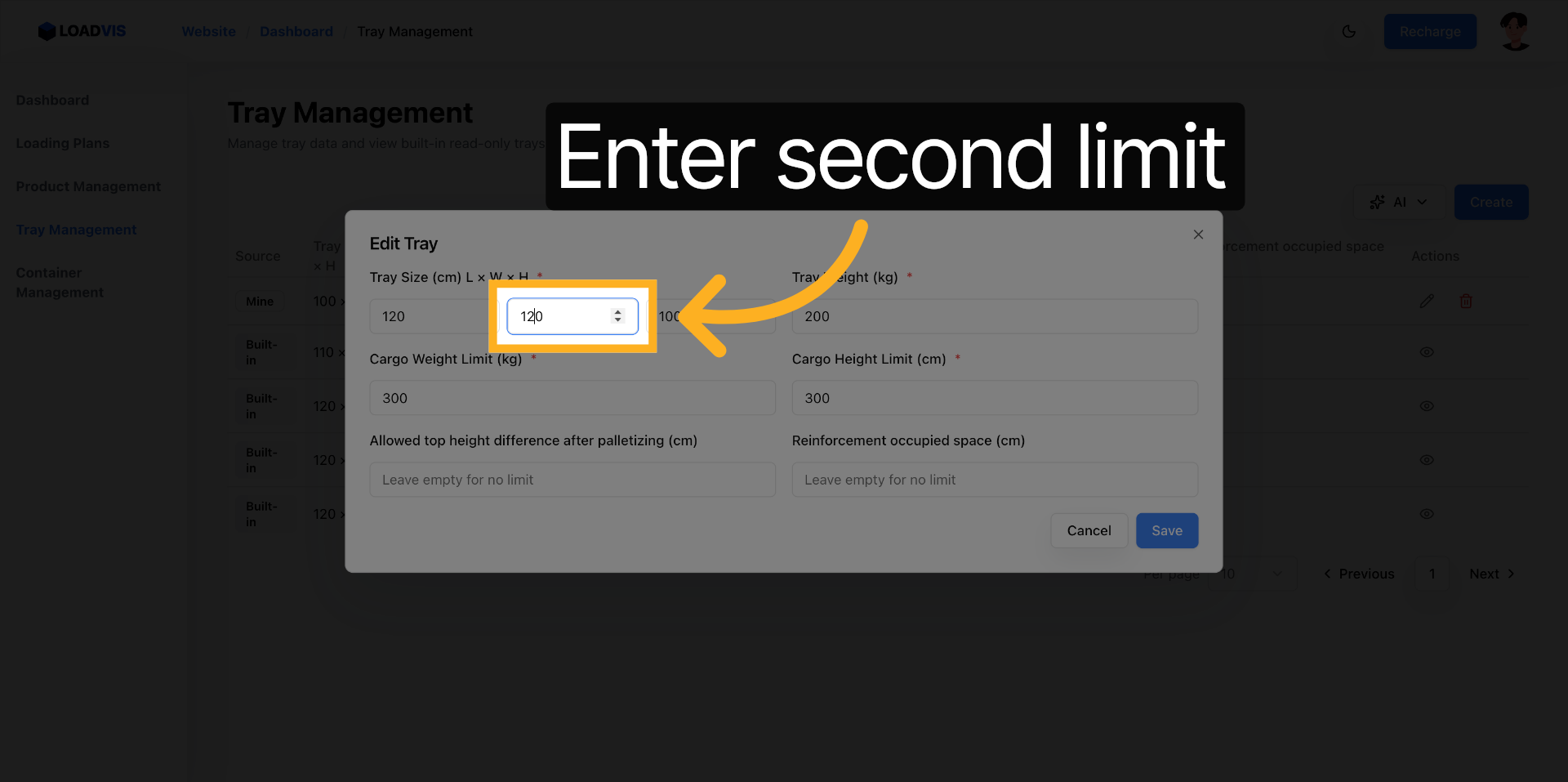
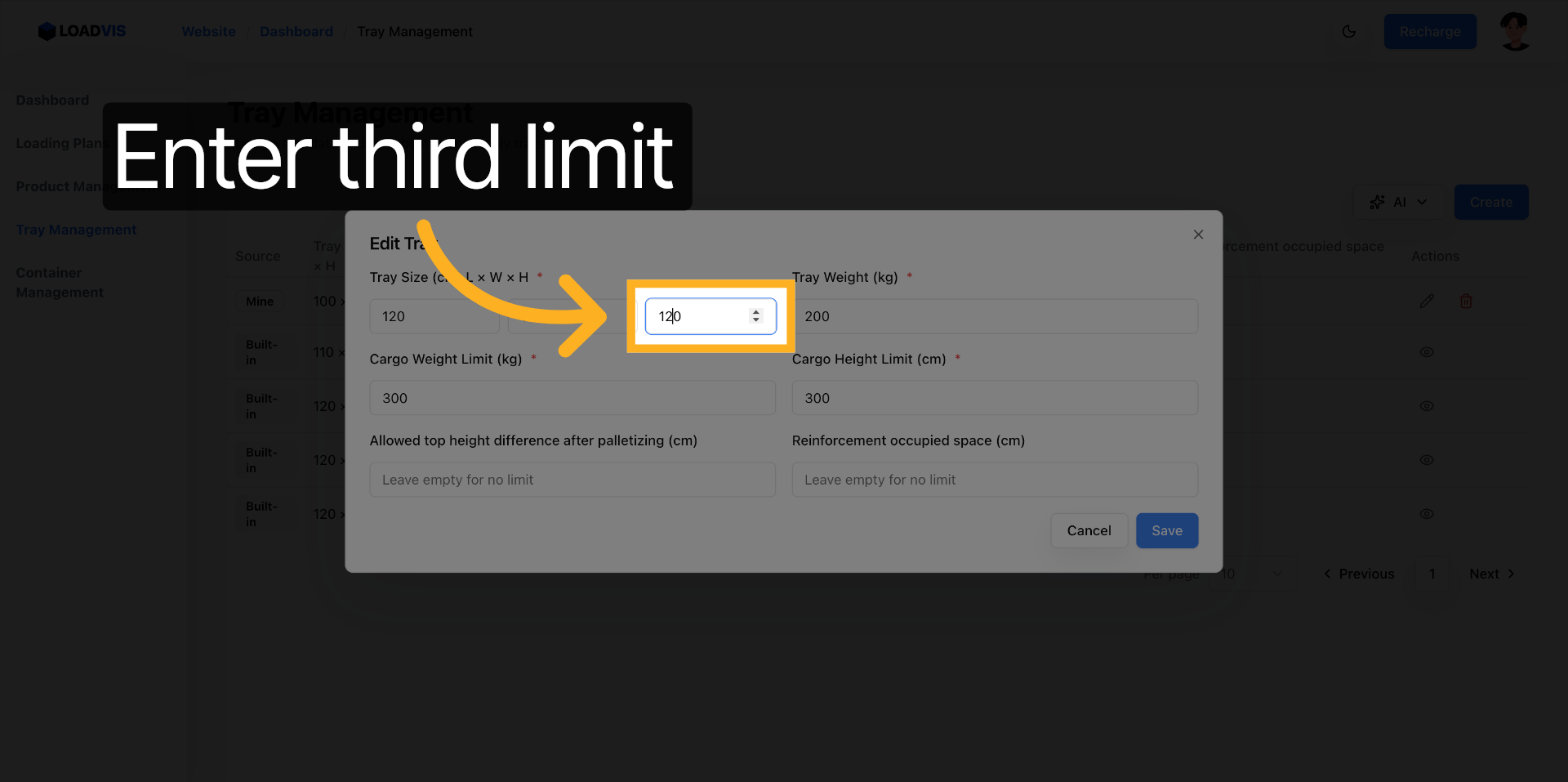
You carry out the deliberate configuration of the reinforcement clearance parameter before committing the changes.

You finalize the editing session to persist the updated constraint boundaries.

Conditions and Judgment Criteria
AI recognition performs reliably only when you supply structured input containing explicit unit delimiters. Ambiguous phrasing or vendor shorthand forces manual override execution. Always carry out a manual review cycle prior to approval.
Load limits must actively absorb real-world degradation variables. Pallet fatigue from repeated handling cycles. Moisture swelling during seasonal transitions. Handling methodology divergences between manual hydraulic jacks and heavy-duty counterbalance forklifts. You should apply a 10 to 15 percent operational safety margin when formal testing documentation remains absent.
Reinforcement clearance rarely maintains uniform dimensions across mixed procurement batches. You must configure distinct tray variants whenever structural geometries exhibit measurable batch variability. Calculating averaged values introduces systematic stacking misalignments.
You must re-validate configuration parameters whenever you transition container profiles or switch transport modalities. Door aperture clearances change fundamentally. Vibration profiles shift in frequency and amplitude. Constraint priority realigns dynamically based on the transport medium.
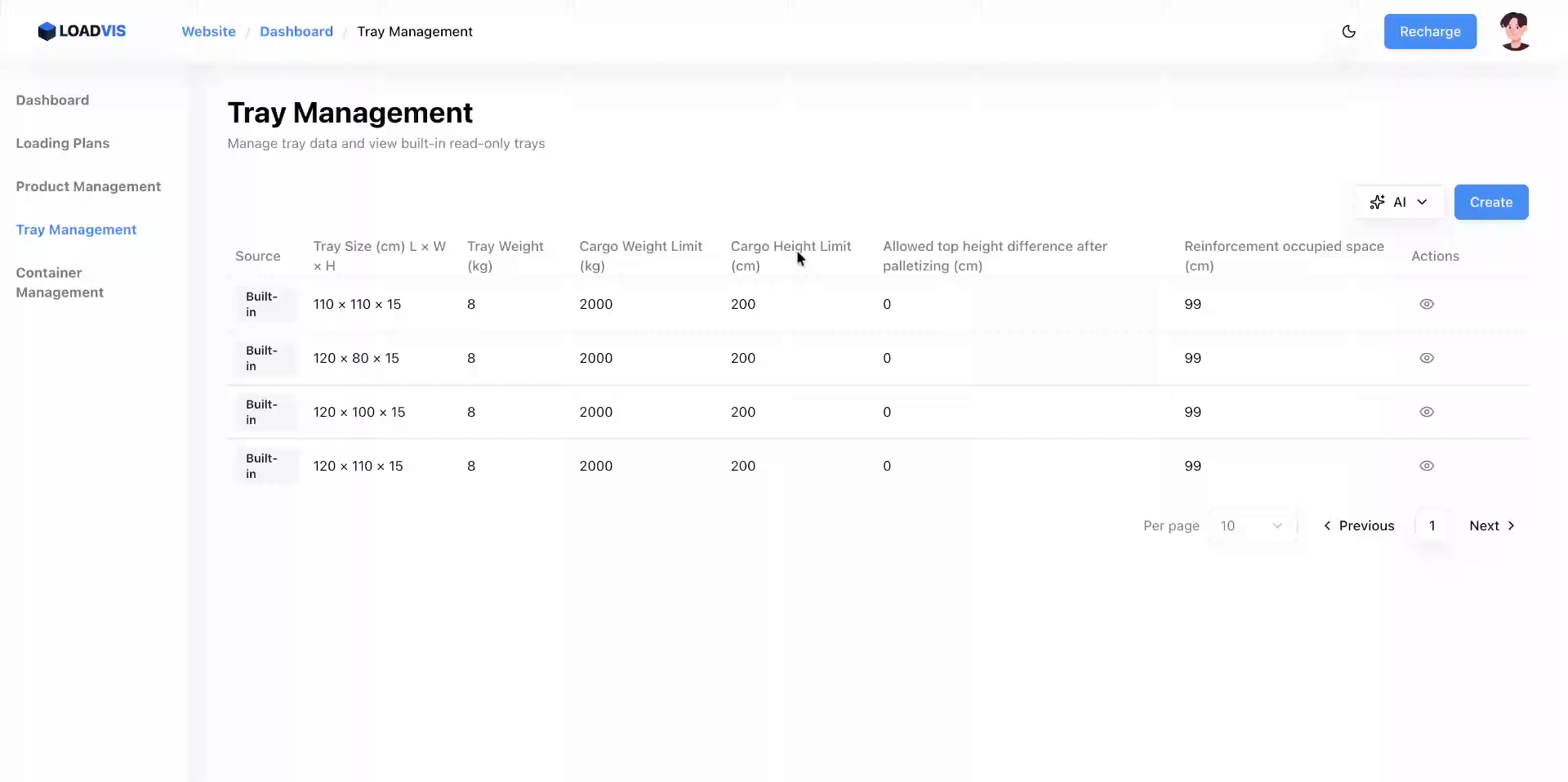
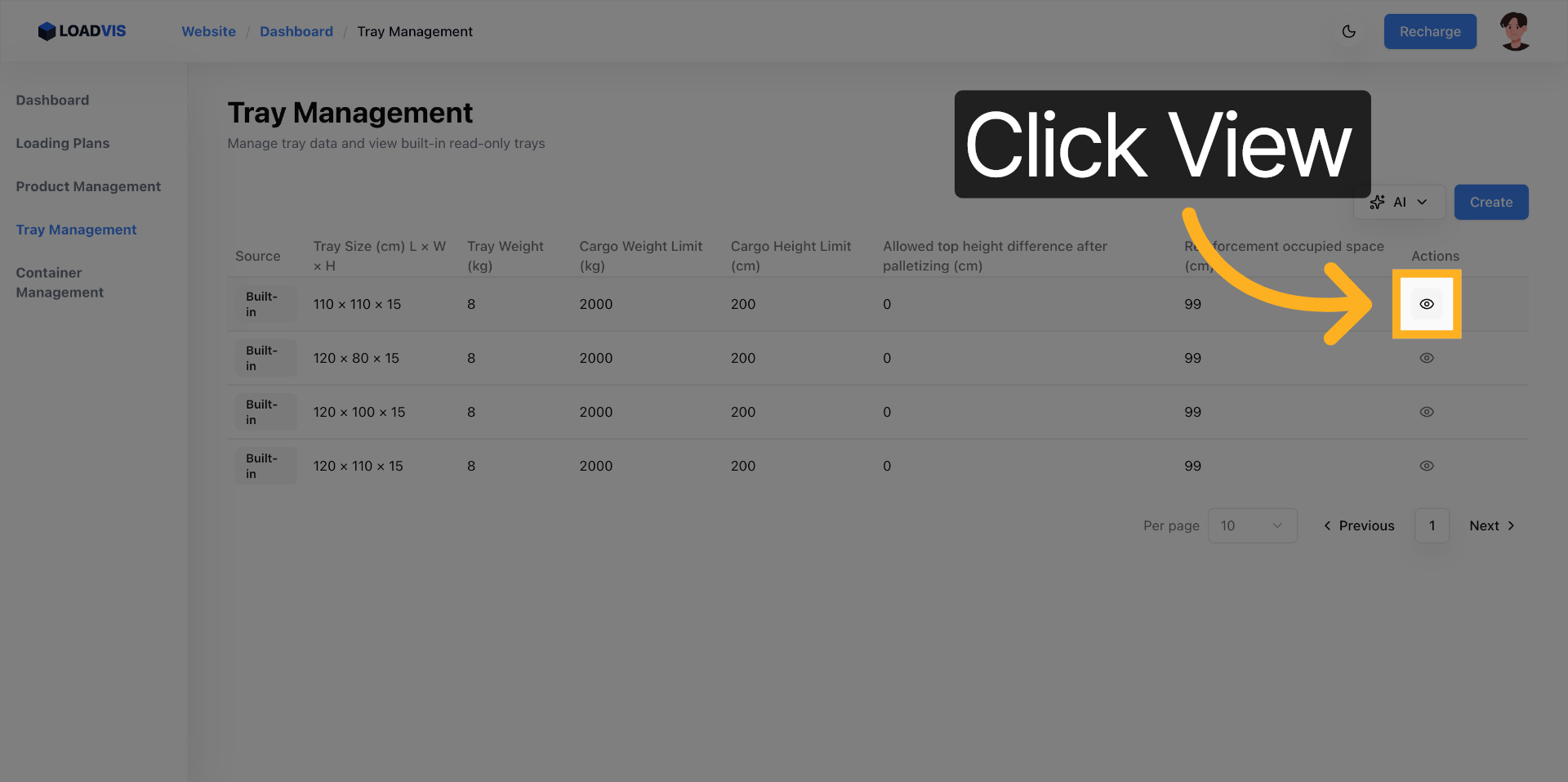
You carry out the navigation to the management list to locate specific tray configurations.
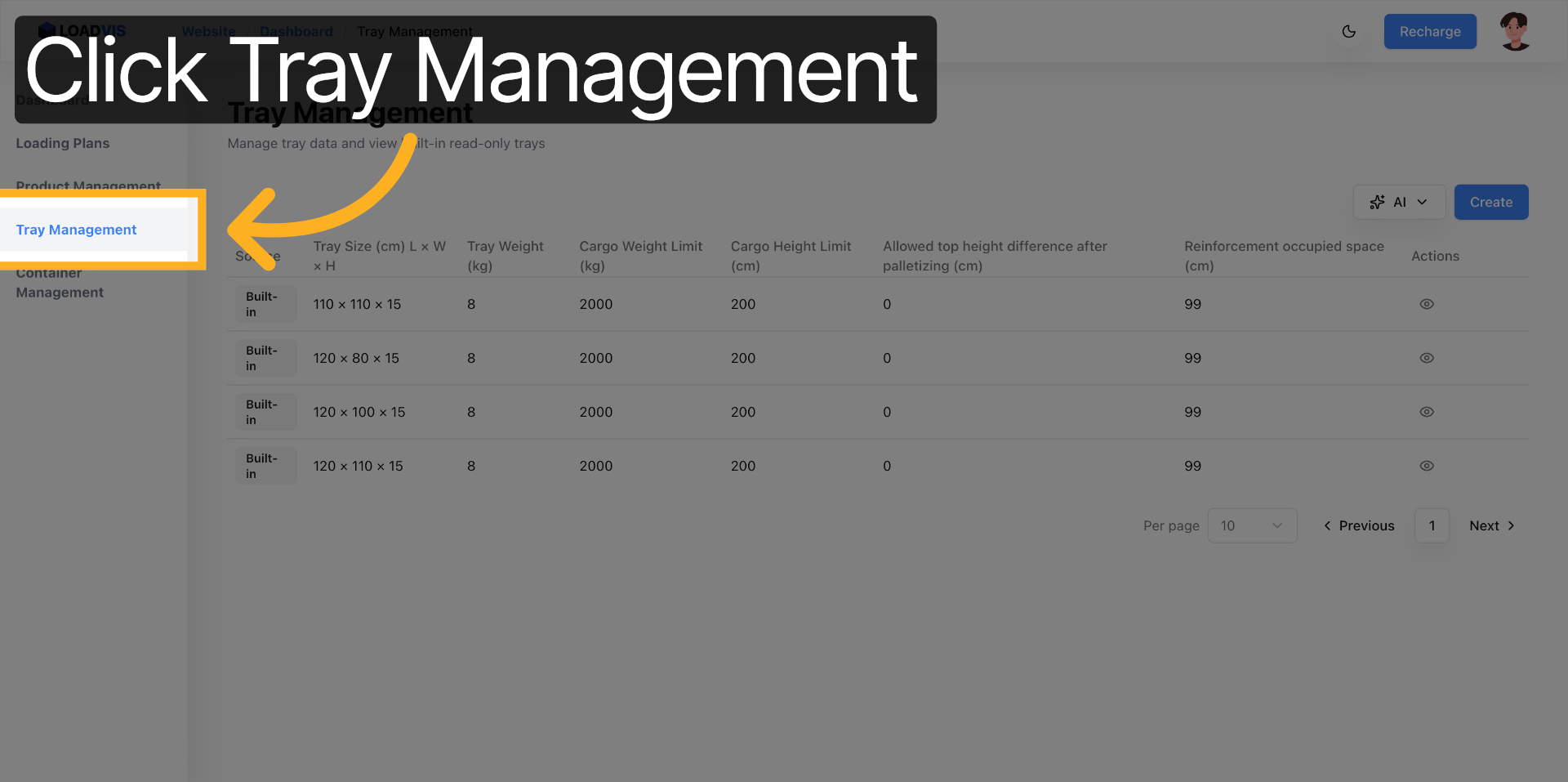
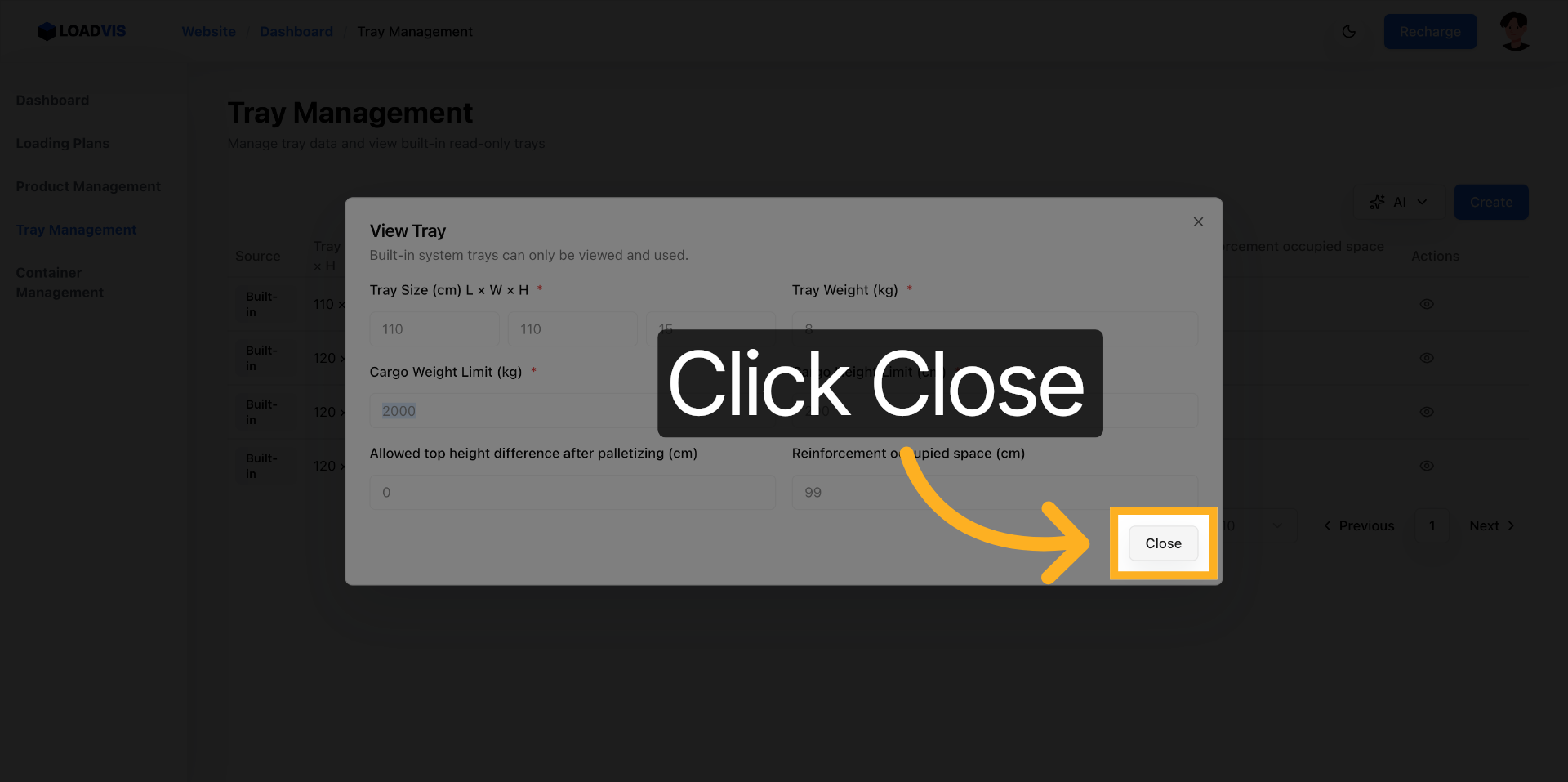
You open the detail view to examine the complete constraint matrix and verify dimensional alignment.
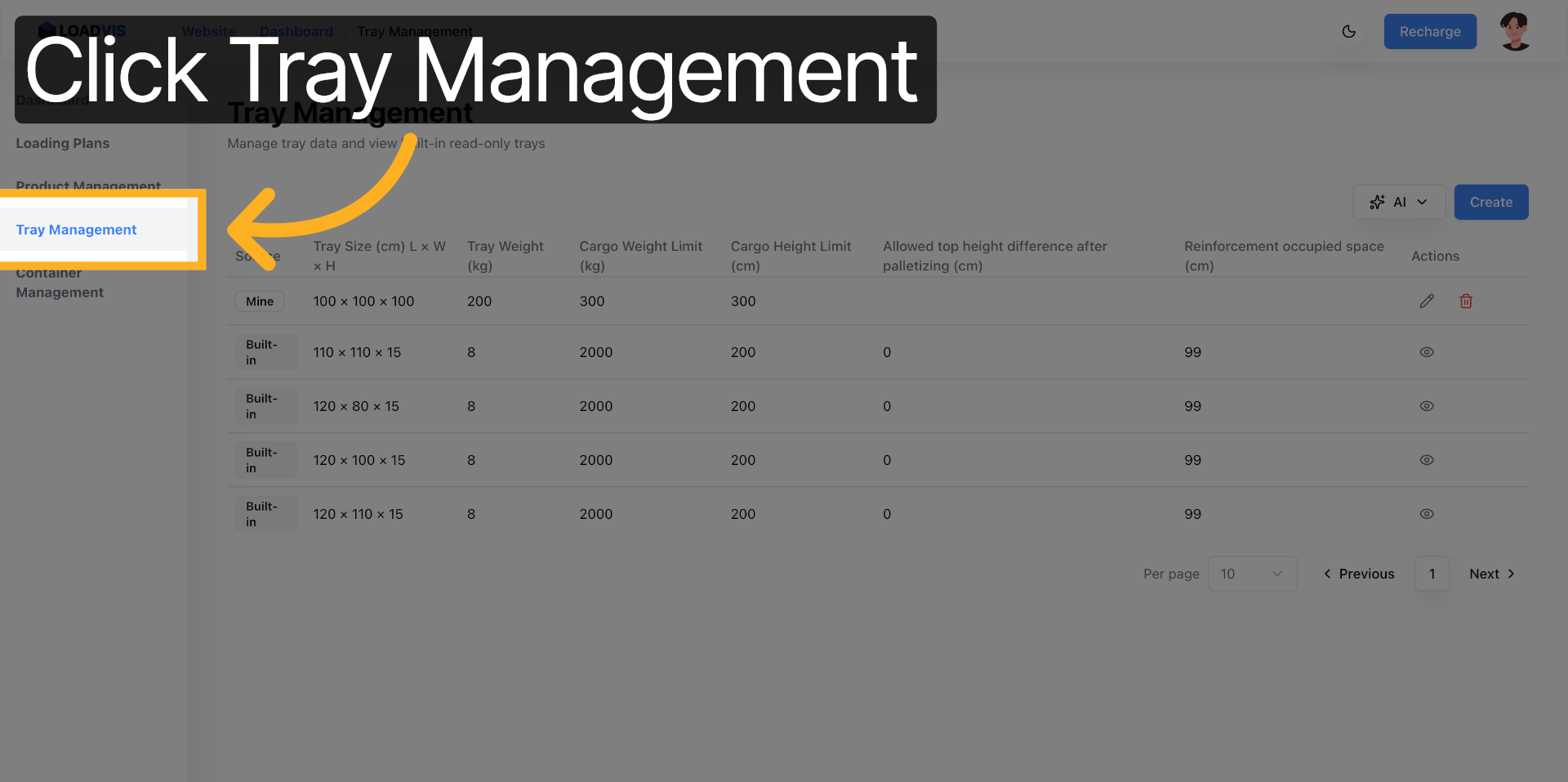
You execute the close routine to return to the primary list overview once verification concludes.
Concise Summary
Tray master data functions as the physical constraint foundation governing the entire loading algorithm. AI recognition accelerates parameter ingestion and eliminates formatting drift, but it cannot validate physical reality or operational context. Manual verification of self-weight subtraction, dynamic load boundaries, reinforcement clearance tolerances, and measurement variances remains strictly mandatory. Consistently calibrated, field-verified tray templates eliminate execution friction. The algorithmic plan transitions from digital simulation to physical dock operations without deviation. Operations proceed predictably. Freight moves efficiently.